
Last updated September 23, 2026
Free visual inspection and a written scope of work before any mitigation begins - photos, moisture readings, and drying logs go in your claim file
The scope we write is the scope we bill. Anything new gets shown to you, in writing, before we touch it.
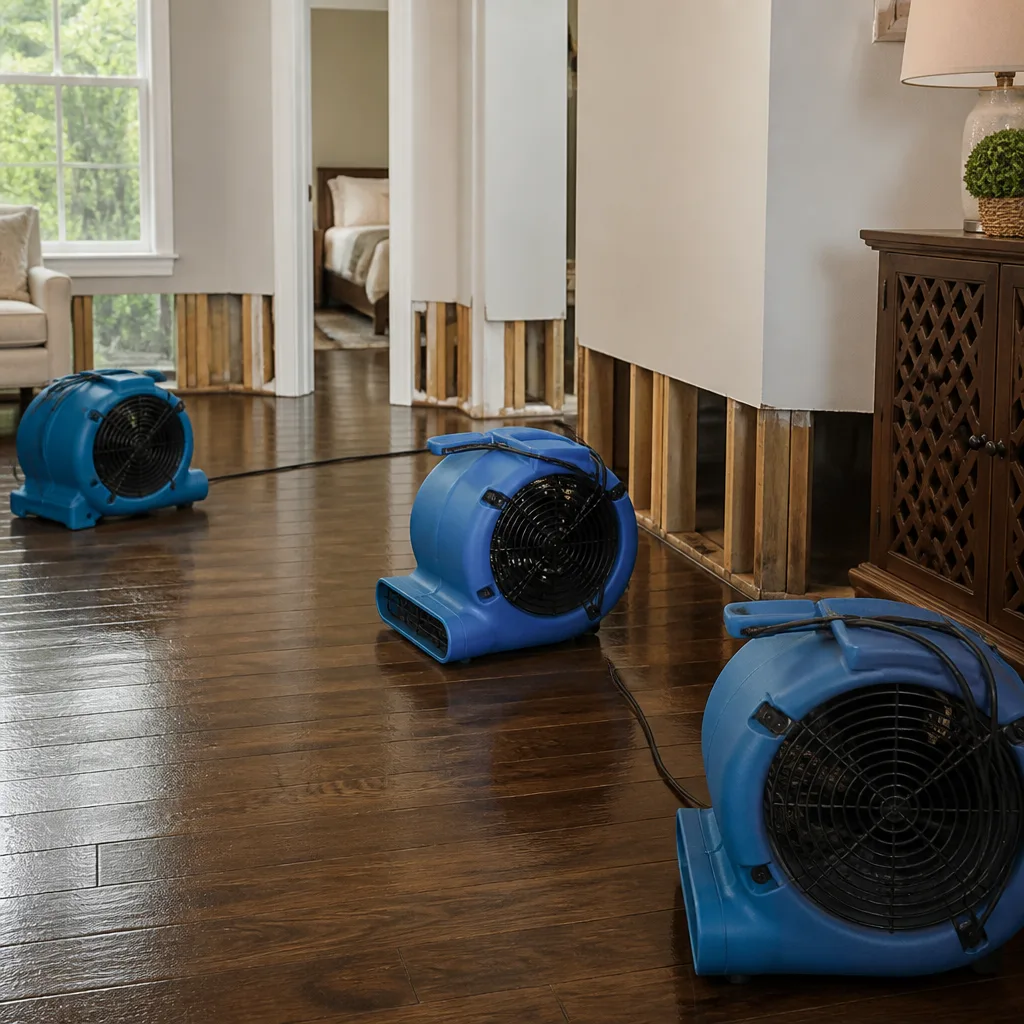
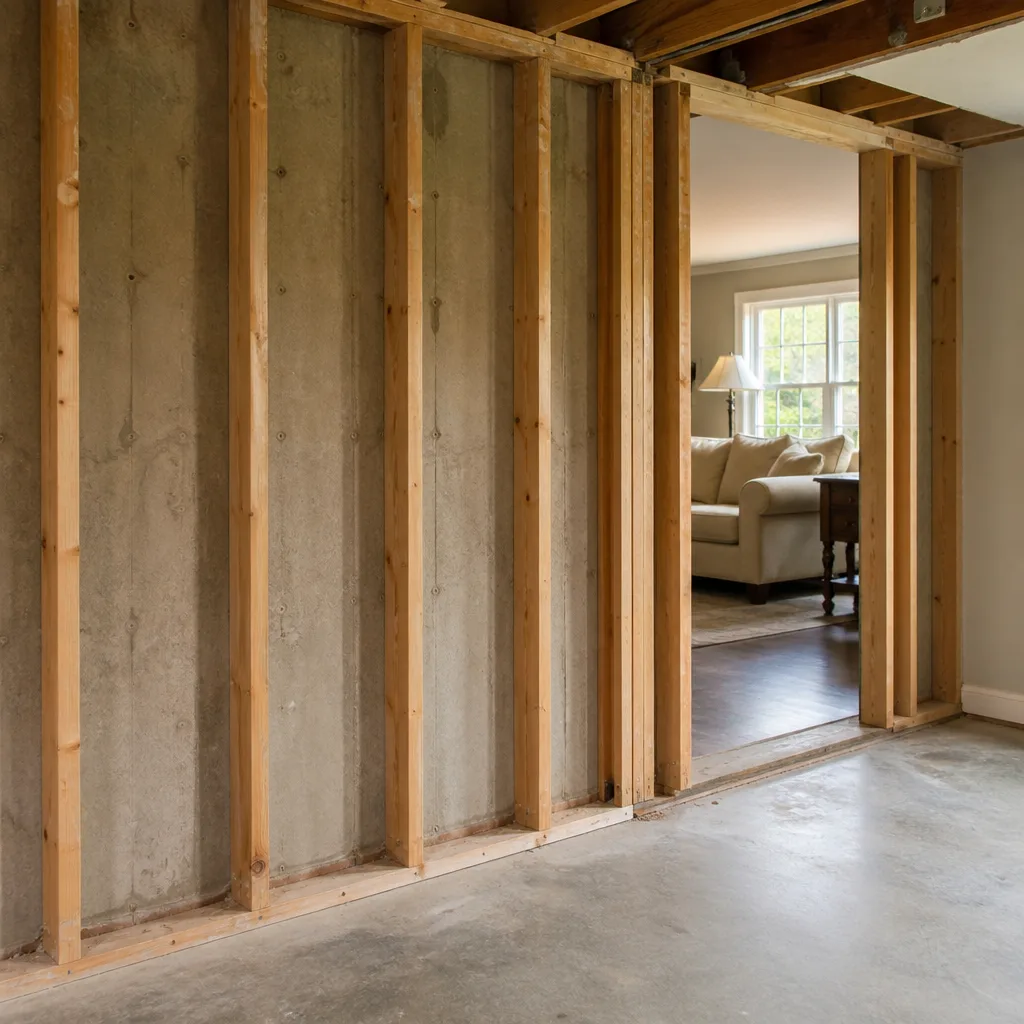
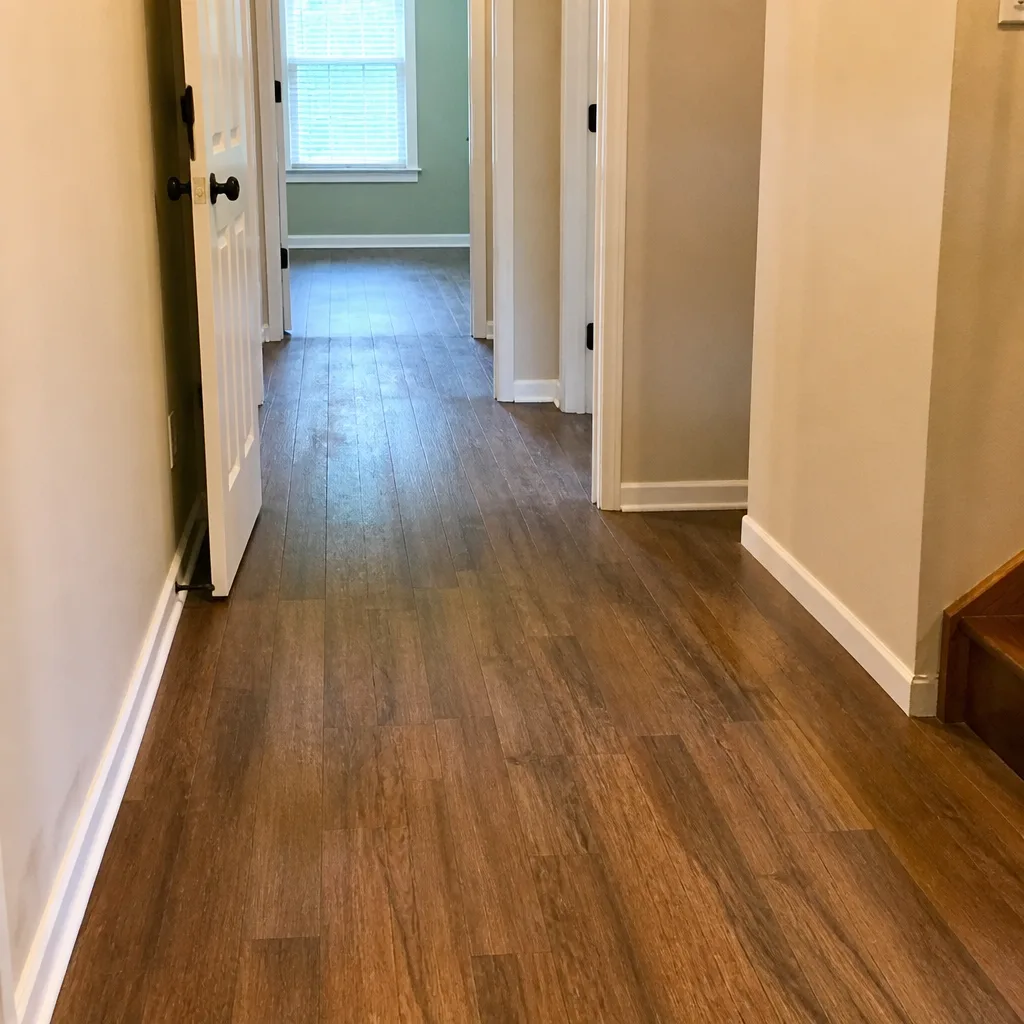

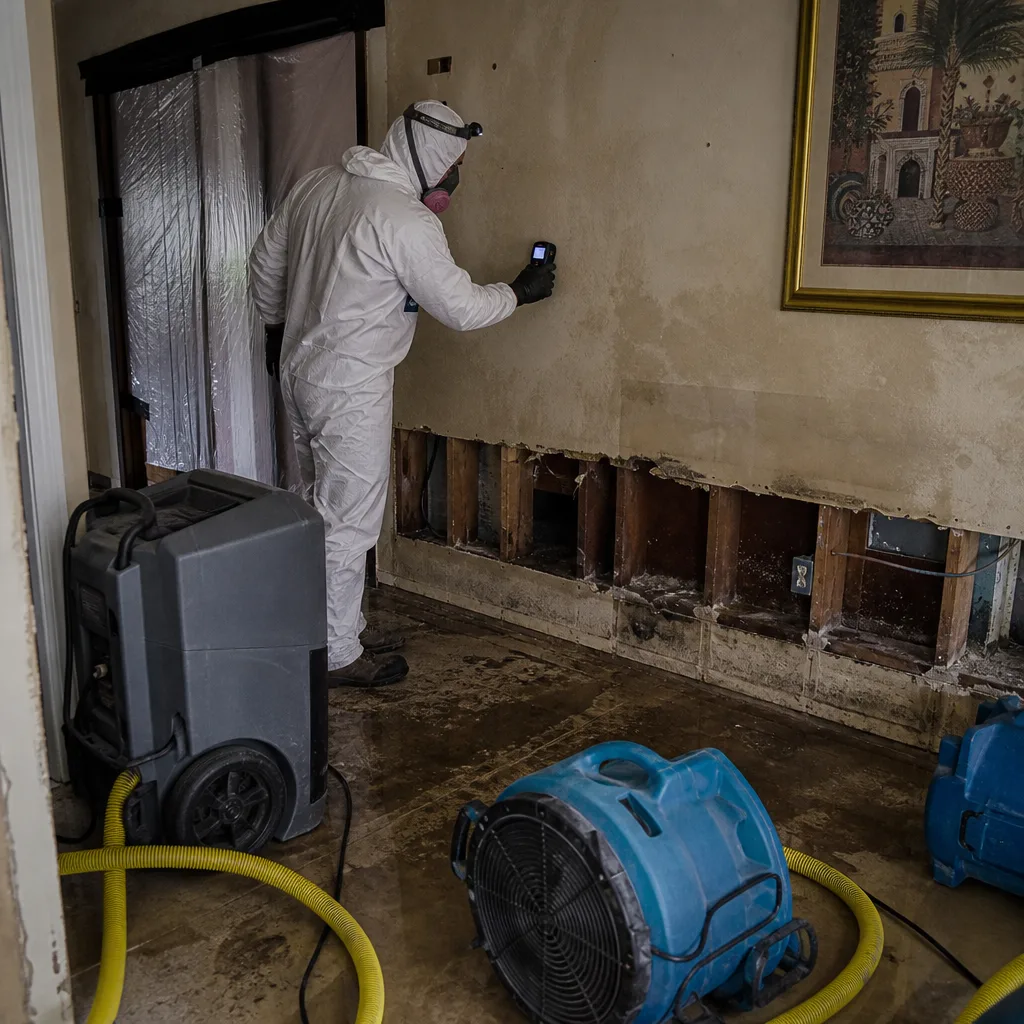 Before
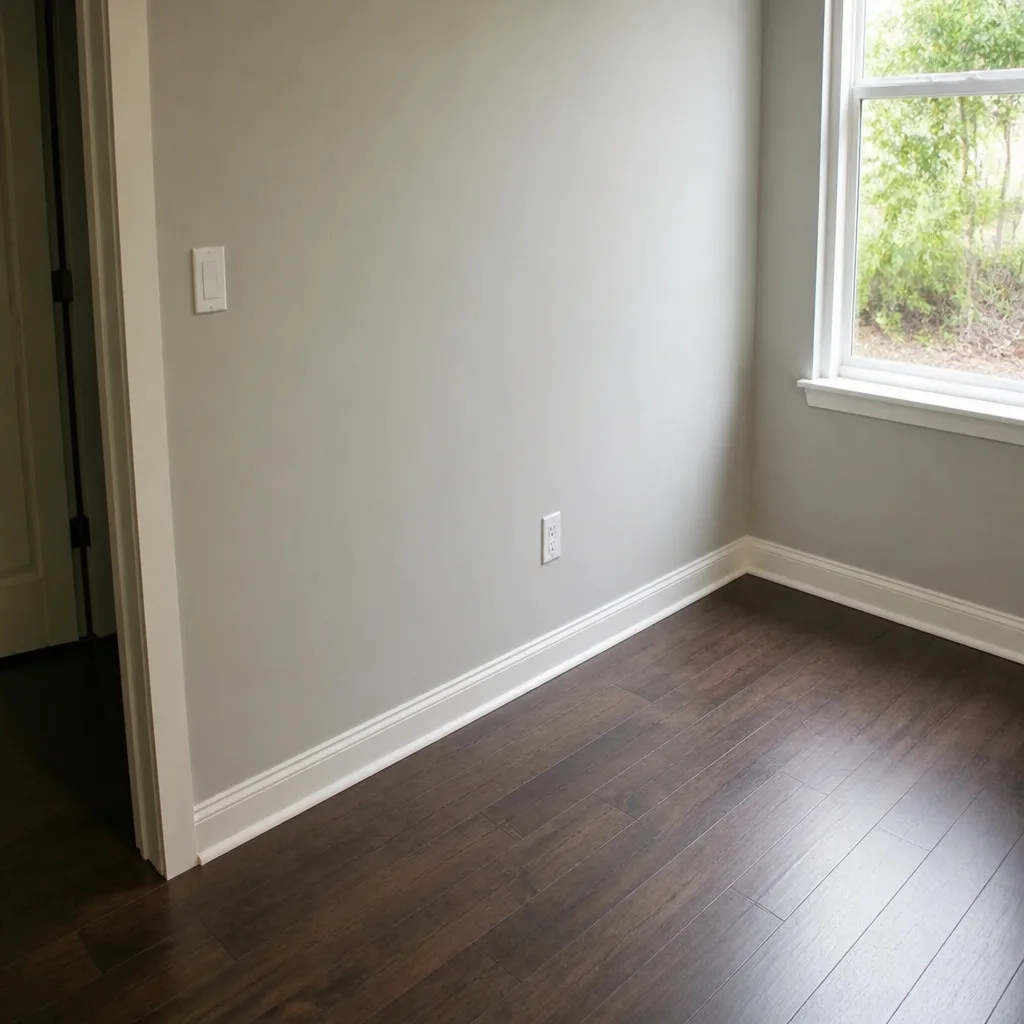 After
After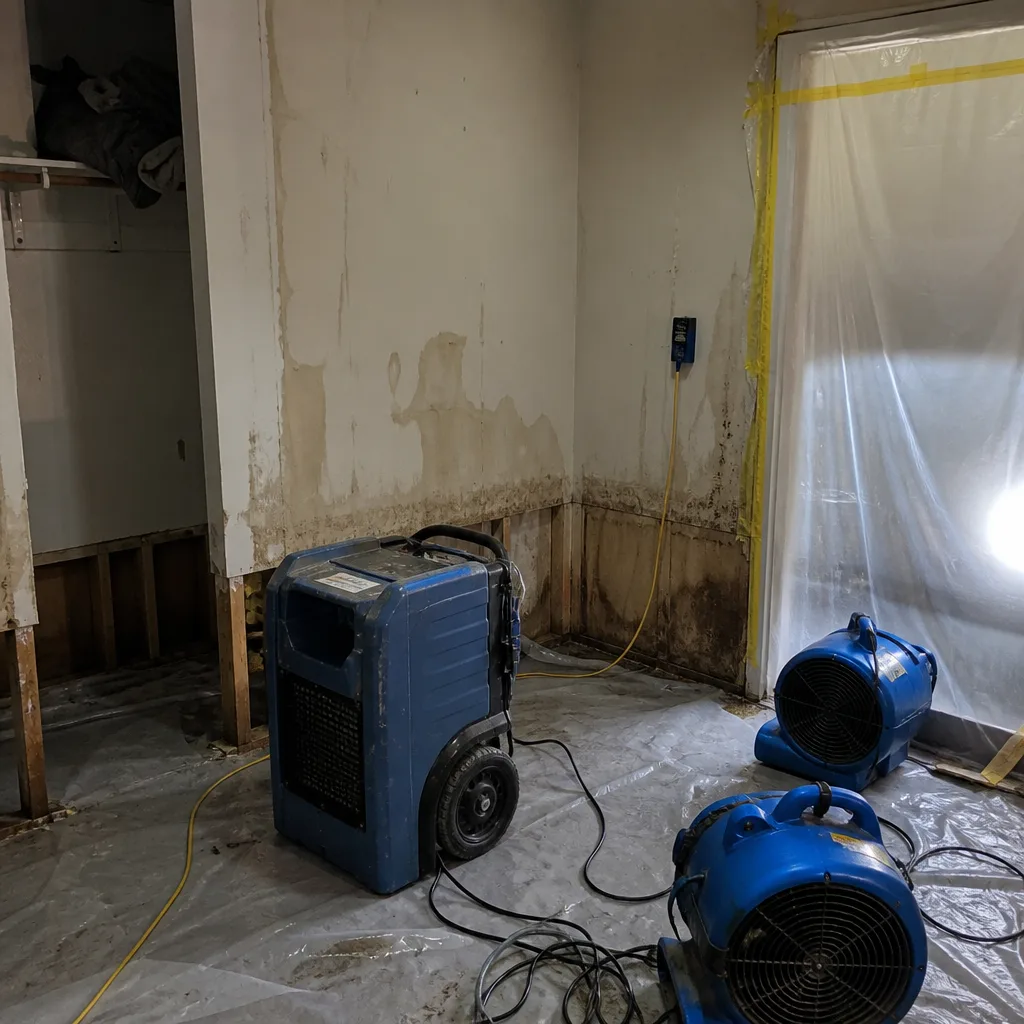 Before
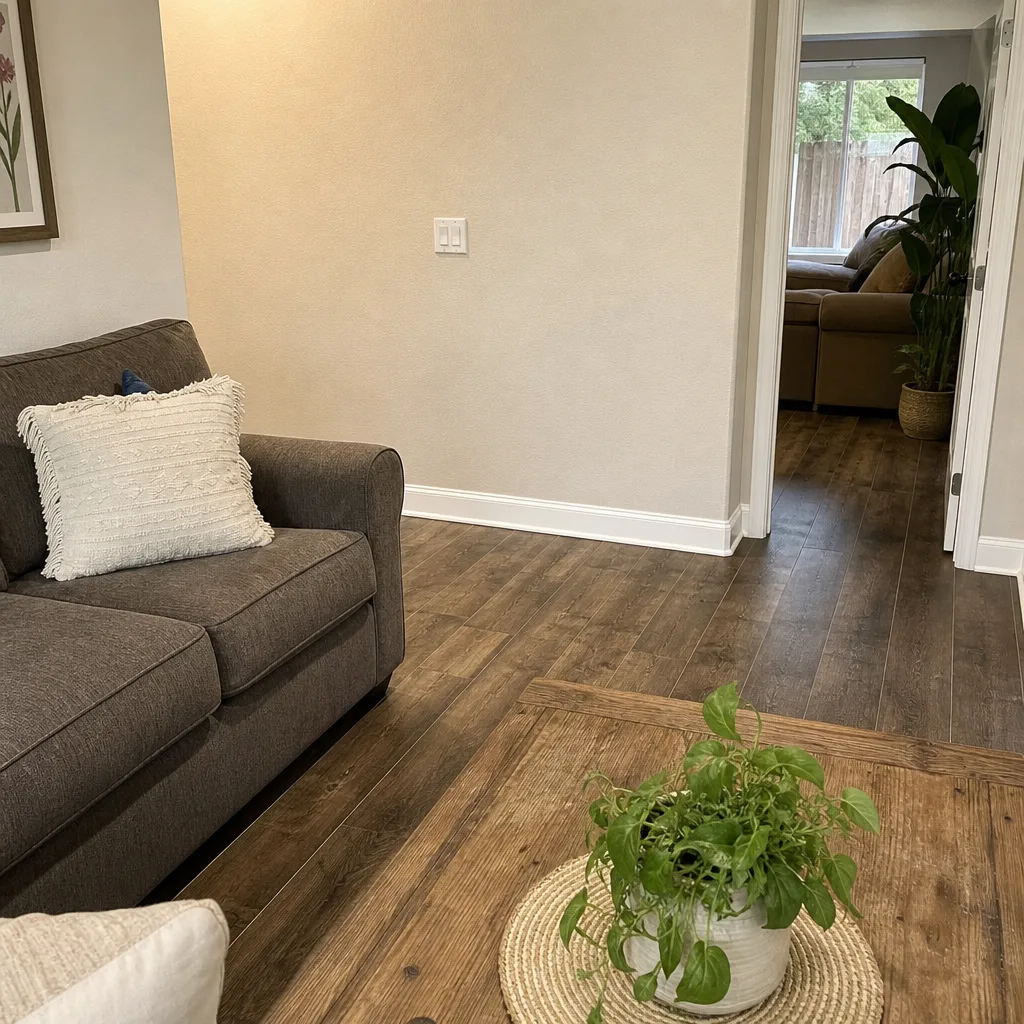 After
After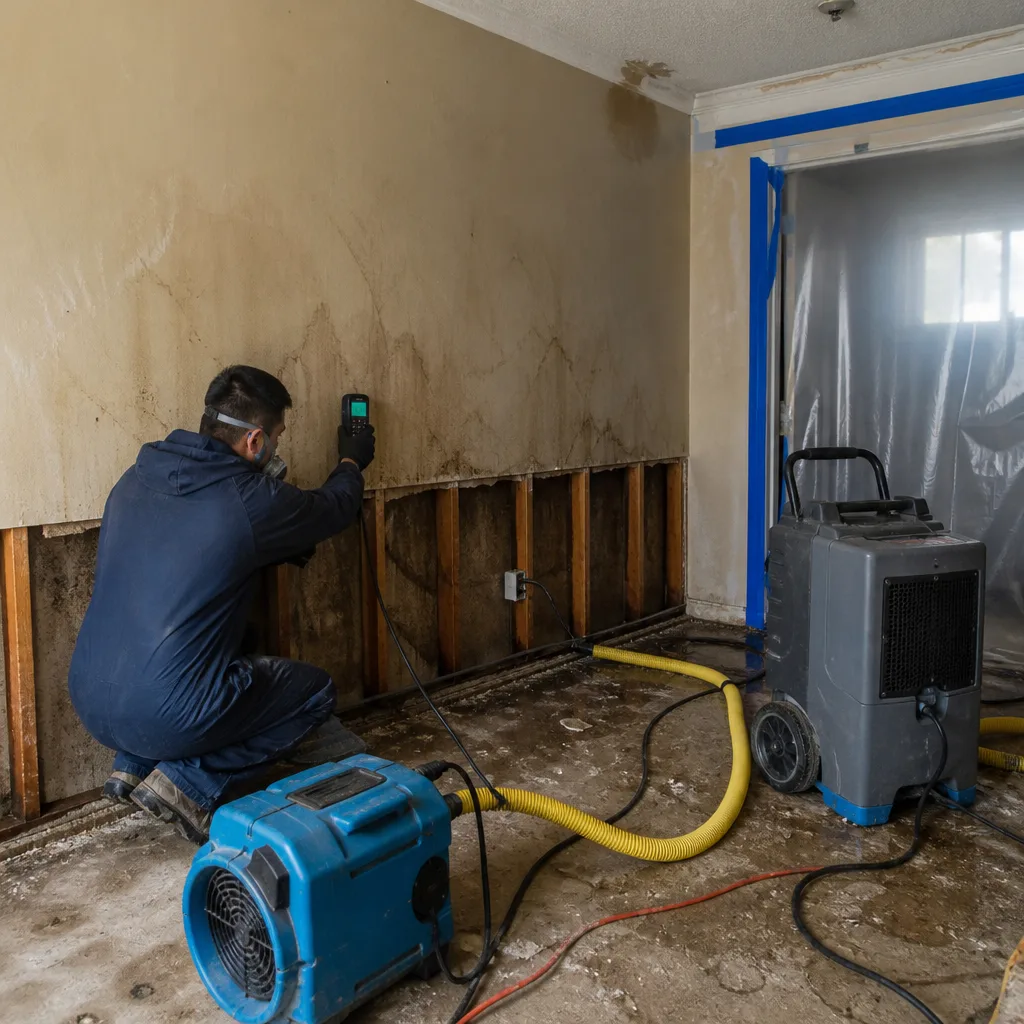 Before
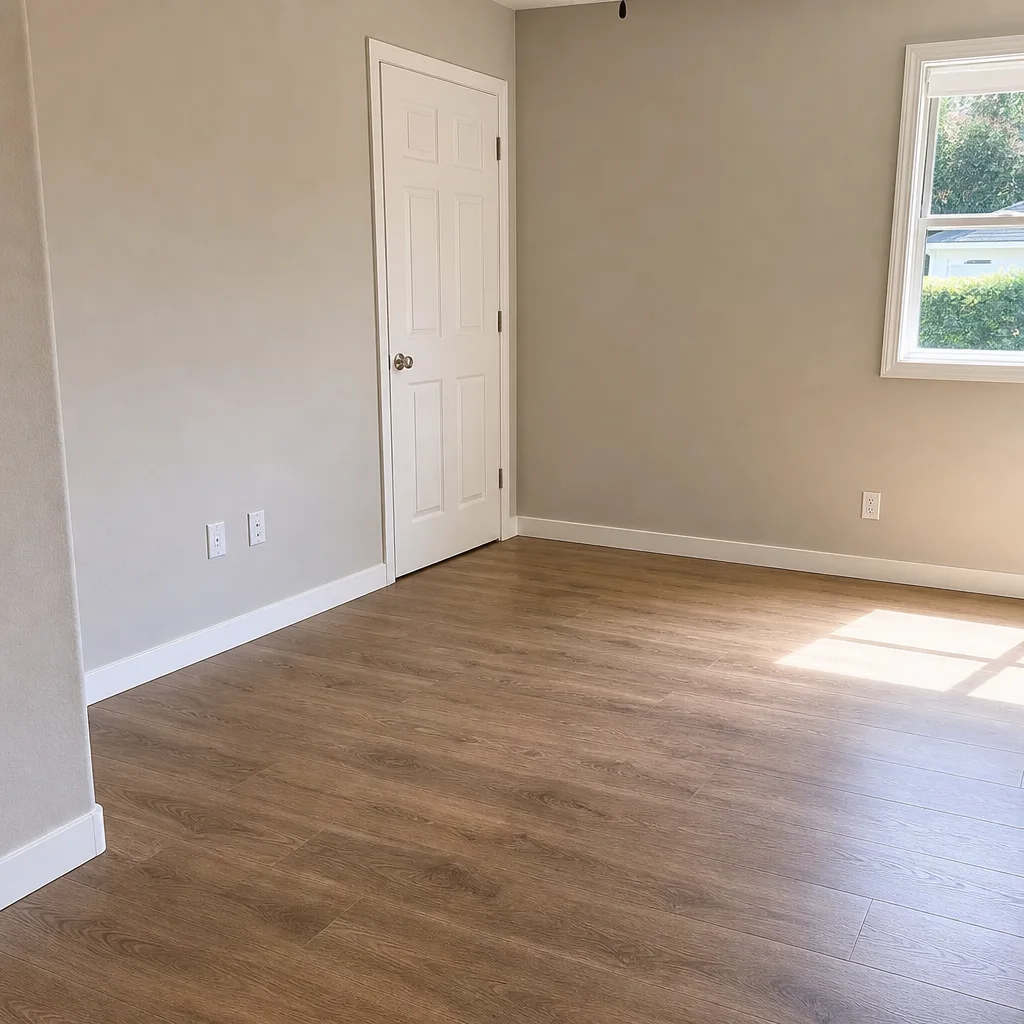 After
AfterDamage Restoration Permits, Codes & Inspections in CA: What You Need to Know
Unpermitted structural drying work that disturbs asbestos-containing materials in homes built before 1980 - a common scenario in Fallbrook’s older neighborhoods - can trigger Cal/OSHA fines that dwarf the original restoration invoice. We’ve reviewed claims where a $3,200 water mitigation ballooned into a $47,000 regulatory headache because no pre-demolition survey was conducted, no permit was pulled, and no notification was filed. This guide explains which restoration tasks actually require permits in San Diego County, when asbestos and lead testing is legally mandatory, and how to verify that your contractor’s paperwork will protect your insurance coverage and your home’s resale value. For related reading, see our Damage Restoration Warning Signs: A Fallbrook Homeowner’s Reference Guide.
Quick Answer
Most water extraction and drying work does not require a permit in California, but any repair involving structural elements, electrical systems, plumbing, or HVAC does. In San Diego County, demolition of load-bearing walls, replacement of subfloors, and reconstruction of fire-damaged framing all require permits and inspections. For homes in Fallbrook built before 1981, Cal/OSHA regulations mandate asbestos testing before any demolition or disturbance of regulated materials, regardless of whether a building permit is required.
Table of Contents
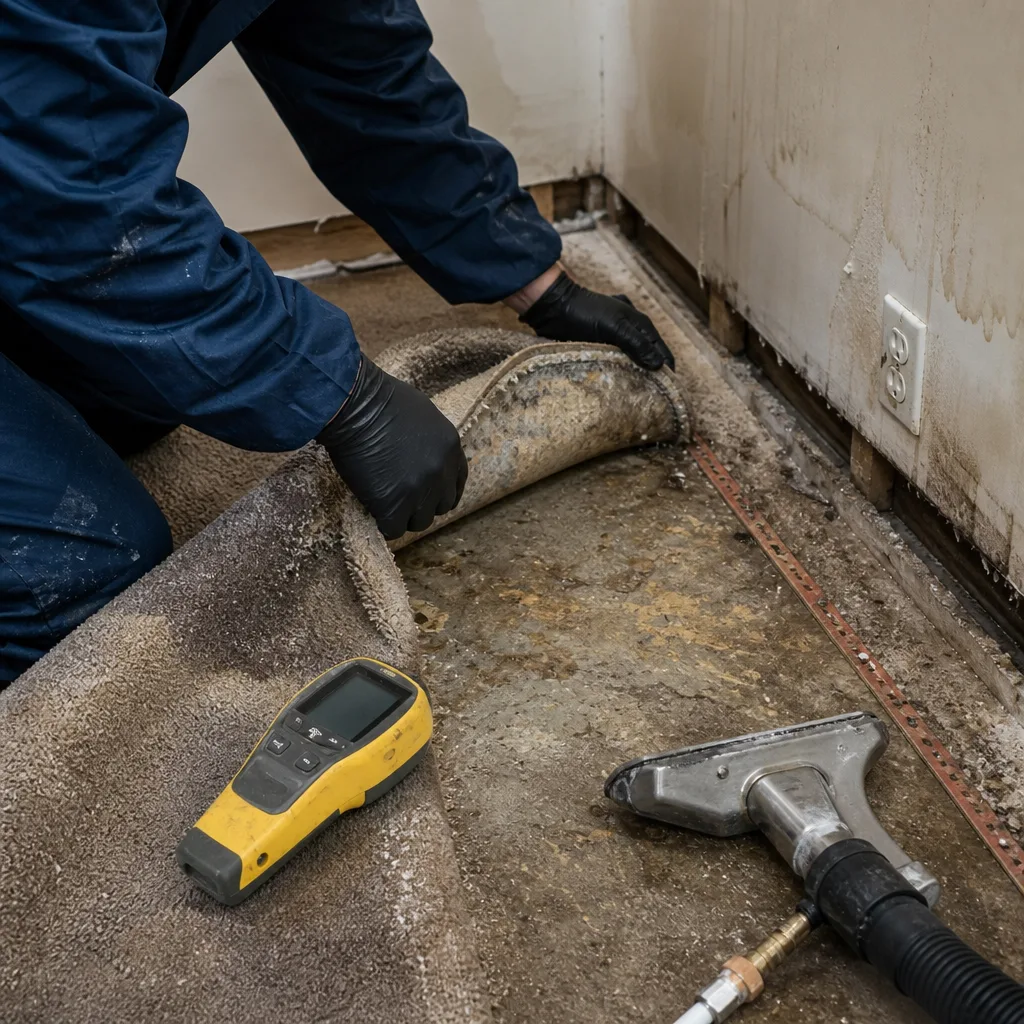
- Permit-Required vs. Exempt Restoration Work
- California Building Code Section 105.2: What ‘Exempt’ Actually Means
- Asbestos and Lead: The Pre-Demolition Requirements Competitors Skip
- How Unpermitted Work Voids Your Insurance Coverage
- CSLB License Classifications: Who Can Legally Do What
- How to Verify Permits and Inspections Independently
- Fallbrook-Specific Considerations: Climate, Age, and Code
- What Proper Documentation Looks Like
BeforeAfterPermit-Required vs. Exempt Restoration Work
The restoration industry operates in a gray zone that confuses homeowners and cuts corners. Water extraction, dehumidification, and surface cleaning generally fall outside permit requirements. The moment a saw blade touches a wall stud or a plumber caps a line, the rules change.
Typically exempt (no permit needed):
- Water extraction using truck-mounted or portable extraction units
- Placement of air movers, dehumidifiers, and desiccant systems
- Non-structural removal of wet drywall, carpet, or pad that does not expose regulated materials
- Surface cleaning and antimicrobial application
- Content manipulation and pack-out services
Permit required in San Diego County:
- Removal or repair of load-bearing walls, even partially
- Subfloor replacement or structural drying that requires decking removal
- Electrical outlet relocation, panel work, or rewiring after water or fire damage
- Plumbing repairs beyond fixture replacement
- HVAC duct replacement or modification
- Roof deck repair following storm or fire damage
- Window or door replacement that alters the rough opening
In Fallbrook, we’ve encountered this distinction most often in homes along the Santa Margarita River watershed, where seasonal groundwater intrusion saturates crawl spaces. Contractors sometimes remove subfloor decking to access saturated insulation and framing without pulling a permit, treating it as “drying” rather than “demolition.” San Diego County Building Division disagrees. Once structural decking comes up, the work requires a permit, an inspection, and often an engineer’s letter if the affected area exceeds 200 square feet.
The Haven Standard, Clause 1 applies here: we deliver a written price before work begins, and that scope explicitly notes which portions of the job are permit-exempt and which require county filing. Homeowners should never discover a permit requirement after demolition has started.
California Building Code Section 105.2: What ‘Exempt’ Actually Means
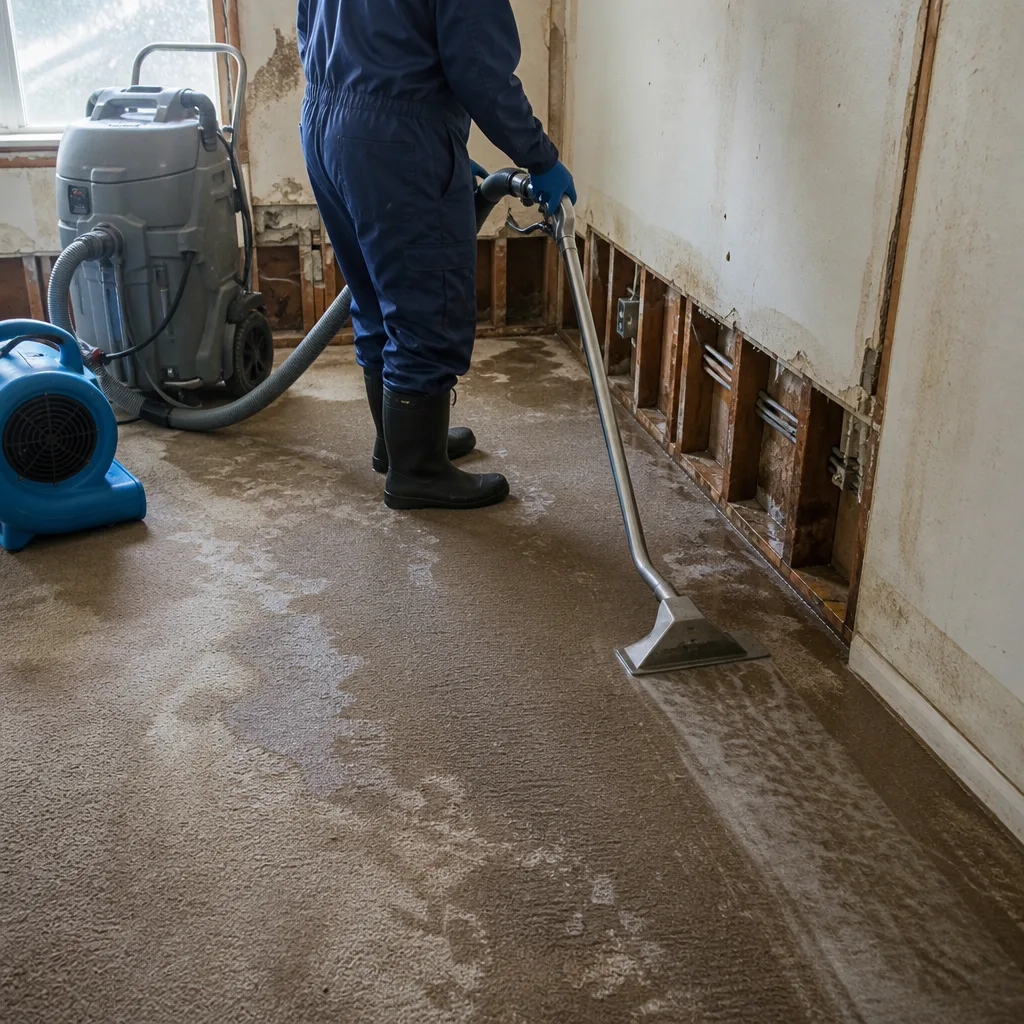
California Building Code Section 105.2 lists work exempt from permit requirements, and restoration contractors frequently misread it. The section exempts “ordinary repairs” that do not affect structural integrity, electrical, plumbing, or mechanical systems. The key phrase is “ordinary.” A water-damaged wall is not ordinary. Fire-compromised framing is not ordinary. Mold-saturated sheathing is not ordinary.
Section 105.2 exemptions and their actual limits:
| Claimed Exemption | Actual Limit | Restoration Scenario That Exceeds It |
|---|---|---|
| Replacement of siding on existing structures | Non-structural, same size/location | Fire damage requiring sheathing replacement; water damage with compromised WRB |
| Replacement of windows in existing openings | No enlargement of rough opening | Mold remediation requiring reframing around degraded studs |
| Repair of interior plaster, drywall, etc. | Surface repair only, no structural members | Cavity drying requiring drywall removal exposing fire blocking or bracing |
| Replacement of roofing on existing buildings | Like-for-like, no structural changes | Storm damage requiring deck repair or insulation replacement |
The exemption for “movable fixtures, appliances, and equipment” does not cover built-in dishwashers, water heaters, or HVAC condensate pumps - all common failure points in water damage scenarios. We’ve seen contractors in Fallbrook’s De Luz area replace a failed condensate pump in a crawl space without a permit, only to have the homeowner’s resale inspection flag the unpermitted electrical work two years later.
San Diego County interprets these exemptions narrowly. Their published guidance states that “repair of damage from fire, flood, or other disaster” generally requires a permit if the repair involves “replacement of structural, electrical, plumbing, or mechanical components.” The exemption for “ordinary repairs” does not apply to disaster damage. This is the interpretation that controls, and it is the one we follow on every job.
Asbestos and Lead: The Pre-Demolition Requirements Competitors Skip
This is where restoration work becomes genuinely hazardous, and where the gap between contractor practice and legal requirement is widest. California’s asbestos regulations are stricter than federal EPA requirements, and they apply regardless of whether a building permit is needed for the underlying work.
Cal/OSHA 8 CCR 5144 and 8 CCR 1529 govern asbestos exposure in construction. Under these regulations, any building material that may contain asbestos must be presumed to contain it unless proven otherwise through laboratory analysis. This presumption applies to all pre-1981 construction. For buildings constructed between 1981 and 1990, a qualified person must assess whether materials are asbestos-containing. Post-1990 construction is generally exempt from the presumption but not from the assessment requirement if suspect materials are present.
The practical thresholds for Fallbrook homeowners:
- Pre-1978 construction: Lead-based paint presumed present; EPA RRP certification required for any disturbance of painted surfaces. Asbestos survey required before demolition or renovation.
- 1978-1980 construction: Asbestos survey mandatory under Cal/OSHA; lead testing strongly advised given manufacturing carryover.
- 1981-1990 construction: Asbestos assessment by qualified person required; no presumption but no exemption either.
Fallbrook’s housing stock skews older. The historic district along Main Avenue, the ranch properties on the east mesa, and the canyon homes in De Luz and Rainbow Heights include substantial pre-1980 construction. We’ve responded to water losses in 1960s-era homes where vinyl asbestos tile was concealed under three layers of later flooring, and where no contractor had ever tested before tearing out wet materials.
The financial exposure is severe. Cal/OSHA can fine employers up to $25,000 per day per violation for asbestos exposure incidents. But the liability does not stop with the contractor. Homeowners who knowingly allow unpermitted, un surveyed demolition can face personal liability, and their property can be subject to cleanup orders from the San Diego County Department of Environmental Health. We’ve seen cleanup costs exceed $80,000 for residential properties where asbestos debris was improperly disposed.
Proper practice requires:
- Pre-demolition survey by a Cal/OSHA-certified asbestos consultant
- Laboratory analysis of suspect materials before disturbance
- Notification to Cal/OSHA if asbestos is present and will be disturbed (required for all commercial buildings and residential buildings with more than four units; strongly advised for single-family homes)
- Work performed by asbestos-certified contractors with proper containment and negative air pressure
- Waste manifest documentation for all asbestos-containing material disposal
At Water Damage Restoration in Fallbrook, we coordinate this testing as part of our standard scope when the structure date or visible materials trigger the regulatory threshold. The photo record we produce includes images of the survey results, the containment setup, and the waste manifests. This documentation becomes part of the claim file that the adjuster reviews.
How Unpermitted Work Voids Your Insurance Coverage
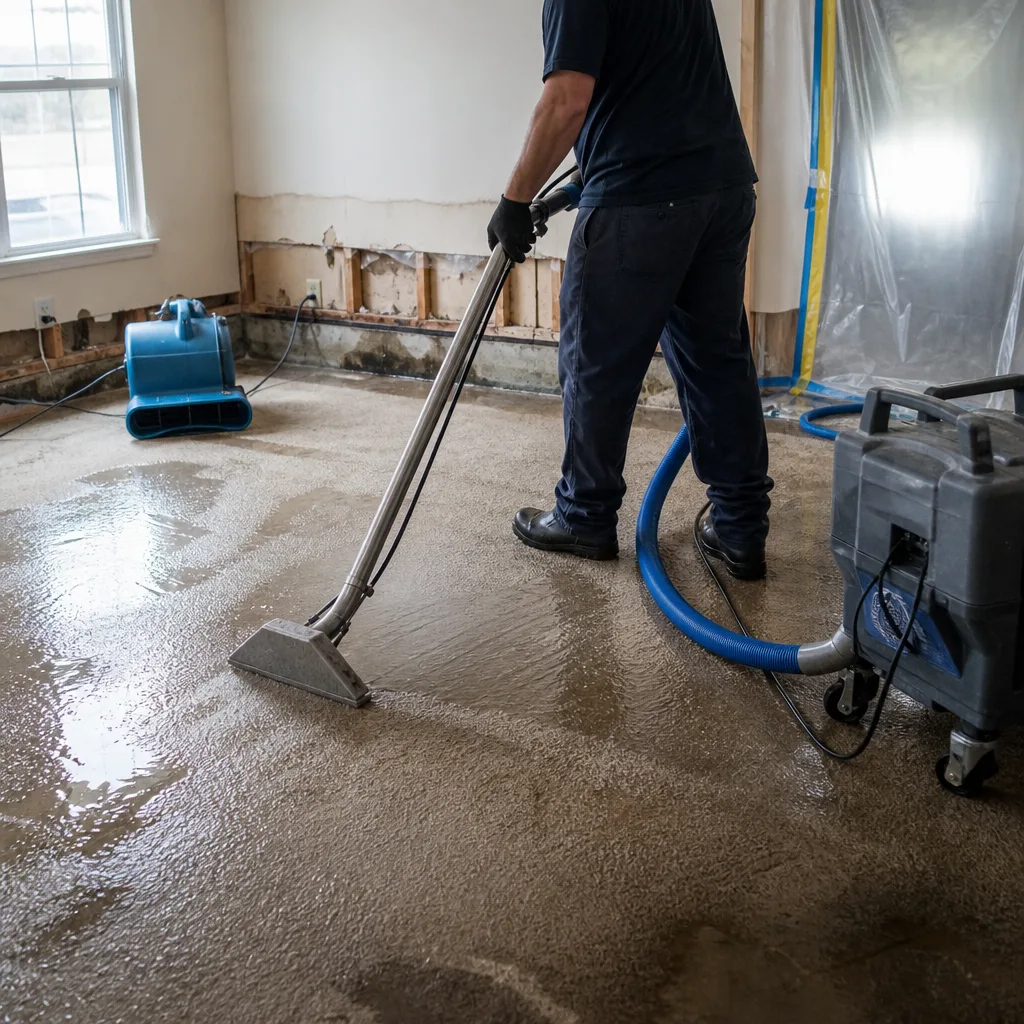
Most homeowners discover this problem at the worst possible moment: when they file a subsequent claim and the carrier denies it based on material misrepresentation in the original repair.
Homeowner’s insurance policies contain a standard condition requiring the insured to comply with all applicable laws and building codes. Unpermitted work violates this condition. More critically, most policies exclude coverage for “faulty, inadequate, or defective construction” - and courts have consistently held that unpermitted work falls within this exclusion because the lack of inspection means the work was never verified as adequate.
The specific mechanisms of coverage loss:
- Rescission of the original claim: If the carrier discovers unpermitted work during review of the original claim, they may retroactively reduce the payment to reflect only permit-exempt work, leaving the homeowner to cover the difference.
- Denial of subsequent claims: A mold claim two years after unpermitted water damage repair may be denied on the basis that the original repair was defective and caused the mold.
- Non-renewal or cancellation: Carriers routinely inspect properties at renewal. Visible unpermitted additions or repairs trigger non-renewal in California’s increasingly restrictive market.
- Resale liability: California Civil Code Section 1102 requires disclosure of unpermitted work. Failure to disclose exposes sellers to post-sale litigation, and disclosure typically reduces sale price or kills the transaction.
We’ve reviewed competitor estimates in Fallbrook where the scope included subfloor replacement, electrical outlet relocation, and drywall installation - all permit-required work - with no permit line item and no inspection contingency. Before choosing a contractor, read our How to Hire a Damage Restoration Contractor in Fallbrook: A Step-by-Step Guide. The homeowner’s “savings” of $800 in permit fees became a $12,000 coverage gap when the next rain event revealed that the relocated outlet was ungrounded and the subfloor was uninsulated, causing condensation and mold.
Our documentation-first approach exists precisely to prevent this outcome. Every written scope we produce identifies permit-required work, includes the estimated permit and inspection fees, and specifies who will pull the permit (DryMark or a designated subcontractor holding the appropriate CSLB classification). The photo record on every visit documents code-compliant installation. The 365-Day Done Right Promise under The Haven Standard covers not just the quality of work but the completeness of the documentation that protects the homeowner’s interests.
CSLB License Classifications: Who Can Legally Do What
California contractors must hold specific license classifications for permit-required work, and restoration companies frequently operate outside their licensed scope. Homeowners rarely check until a problem arises.
Relevant CSLB classifications for restoration work:
| License Class | Permitted Work | Restoration Application |
|---|---|---|
| B – General Building Contractor | Any structure built, altered, or repaired; can self-perform or subcontract all trades | Structural repairs, reconstruction, subfloor replacement, load-bearing wall modification |
| C-36 – Plumbing Contractor | Plumbing systems including water, gas, and drainage | Water heater replacement, pipe repair, sewer line work, backflow prevention |
| C-10 – Electrical Contractor | Electrical systems, low voltage, communication | Panel replacement, circuit addition, outlet relocation, generator installation |
| C-20 – Warm-Air Heating, Ventilating, and Air-Conditioning | HVAC systems including ductwork | Duct replacement, condensate line repair, system drying and decontamination |
| C-39 – Roofing Contractor | Roofing, waterproofing, weatherproofing | Roof repair, deck waterproofing, skylight replacement |
No specific CSLB license is required for mold remediation itself. This surprises many homeowners. Any contractor - even an unlicensed handyman for jobs under $500 - can legally perform mold cleaning. However, mold remediation that involves demolition of structural materials requires the appropriate classification for that demolition. A company performing mold remediation in a Fallbrook crawl space that removes floor joists or subfloor decking must hold a B license or subcontract to a B-licensed contractor for that portion of the work.
Cal/OSHA 8 CCR 5144 applies to all mold remediation involving more than minimal disturbance, requiring respiratory protection, containment, and exposure monitoring regardless of license status. The absence of a specific mold license does not mean absence of regulation; it means the regulations are occupational health rules rather than contractor board rules.
We hold and maintain the classifications required for our scope of work, and we subcontract to appropriately licensed specialists when a project requires trades outside our direct licensure. The written scope identifies which license holder performs which work, and the permit applications name the responsible contractor. This transparency is Haven Standard, Clause 1 applied to regulatory compliance: the homeowner sees the full picture before work begins.
How to Verify Permits and Inspections Independently
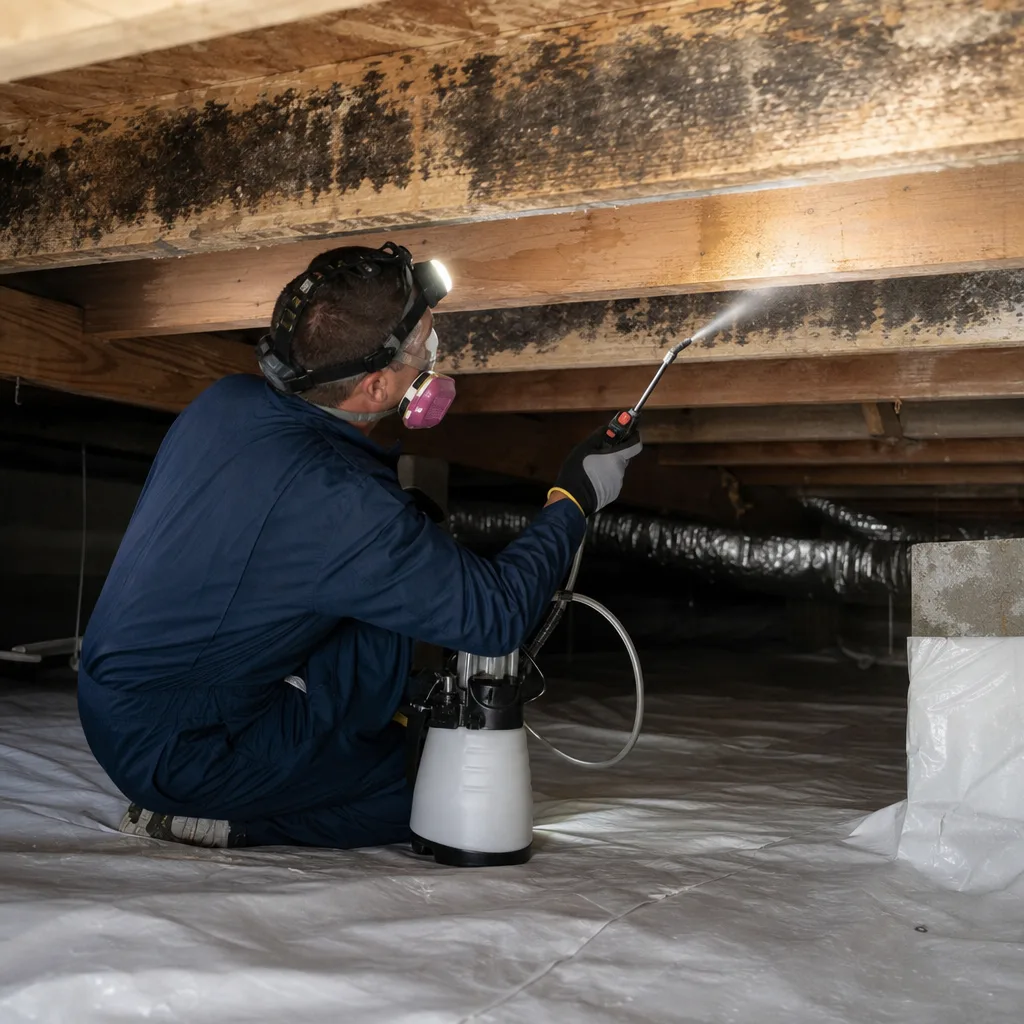
Contractors can say anything. The permit record is the only objective verification. Homeowners in Fallbrook have multiple tools to confirm that work was properly permitted and inspected.
Step-by-step verification process:
- Request copies before work begins. Any contractor pulling a permit on your behalf must provide you with the permit application number, the scope of work as filed, and the estimated inspection schedule. We include this in our written scope package as standard practice.
- Verify through San Diego County’s public portal. The County of San Diego Department of Environmental Health and San Diego County Planning & Development Services maintain online permit lookup systems. Search by property address or permit number to confirm status: applied, issued, inspected, approved, or final.
- Request inspection records at completion. Every permit requires one or more inspections. The inspection record shows the date, the inspector’s name, the result (pass, partial pass, fail), and any corrections required. A “final” status means the work was verified as code-compliant. We provide these records as part of our project closeout documentation.
- Check Cal/OSHA notifications for asbestos work. For projects involving asbestos disturbance, request the notification number and verify it through Cal/OSHA’s Asbestos and Carcinogen Unit. The notification includes the project location, the estimated quantity of material, the abatement contractor’s registration, and the disposal site.
- Confirm CSLB license status. The Contractors State License Board website allows real-time verification of license number, classification, bond status, workers’ compensation coverage, and disciplinary history. Verify that the classification matches the work being performed.
- Review the waste manifest for asbestos projects. Asbestos-containing material must be transported to a permitted disposal facility with a manifest signed by the generator, transporter, and disposer. This document is your proof that material left your property legally.
We encourage this verification. Our documentation package for every permitted job includes: the permit application with number, all inspection sign-offs, the Cal/OSHA notification where applicable, and the waste manifest for regulated materials. These documents are delivered with the final invoice, not upon request. Proactive documentation is the core of our practice.
Fallbrook-Specific Considerations: Climate, Age, and Code
Fallbrook’s particular conditions create permit and code scenarios that differ from coastal San Diego or inland Riverside County. Understanding these local factors helps homeowners ask better questions and avoid generic advice that does not apply.
Climate-driven damage patterns: Fallbrook receives 12-14 inches of annual rainfall concentrated in December through March, with atmospheric river events capable of delivering 3-5 inches in 24 hours. The combination of clay-heavy soils, steep canyon topography, and mature landscaping with invasive root systems produces foundation settlement, sewer line intrusion, and groundwater intrusion patterns that differ from flatter terrain. Restoration work in these conditions often involves subfloor and foundation access that triggers permit requirements not obvious from the interior damage alone.
Housing age and material profiles: The 2010 Census showed 28% of Fallbrook’s housing stock built before 1980, with significant concentrations in the historic district, the Live Oak Park area, and the canyon communities. These homes are presumptive asbestos sites under Cal/OSHA regulations. Common asbestos-containing materials we encounter: 9×9 vinyl asbestos tile, acoustic ceiling texture, duct wrap, and cement-asbestos siding. Lead-based paint is presumed present on all painted surfaces in pre-1978 construction. The regulatory threshold for testing is lower than many contractors acknowledge.
Local amendments and enforcement: San Diego County has adopted the California Building Code with local amendments affecting energy efficiency, wildfire protection, and floodplain construction. The county’s unincorporated status means Fallbrook properties fall under county rather than municipal inspection, with some practical differences: inspections are scheduled through a centralized county system rather than a local office, and response times can be longer during peak periods. Permit-required work without proper inspection scheduling can delay project completion by two weeks or more.
Wildfire reconstruction considerations: Fallbrook’s location in the Wildland-Urban Interface means fire damage reconstruction must comply with Chapter 7A of the California Building Code, requiring ignition-resistant materials, ember-resistant vents, and extended defensible space. These requirements apply to repair of fire-damaged structures, not just new construction, and they affect material selection, permit scope, and inspection criteria. We’ve reconstructed homes in the 2007 Rice Fire footprint where the original scope omitted Chapter 7A compliance, requiring permit revision and material change orders mid-project.
At Fire & Smoke Damage Restoration in Fallbrook, our scopes explicitly address WUI compliance for fire-damaged properties, including the permit amendments and inspection sequences required.
What Proper Documentation Looks Like
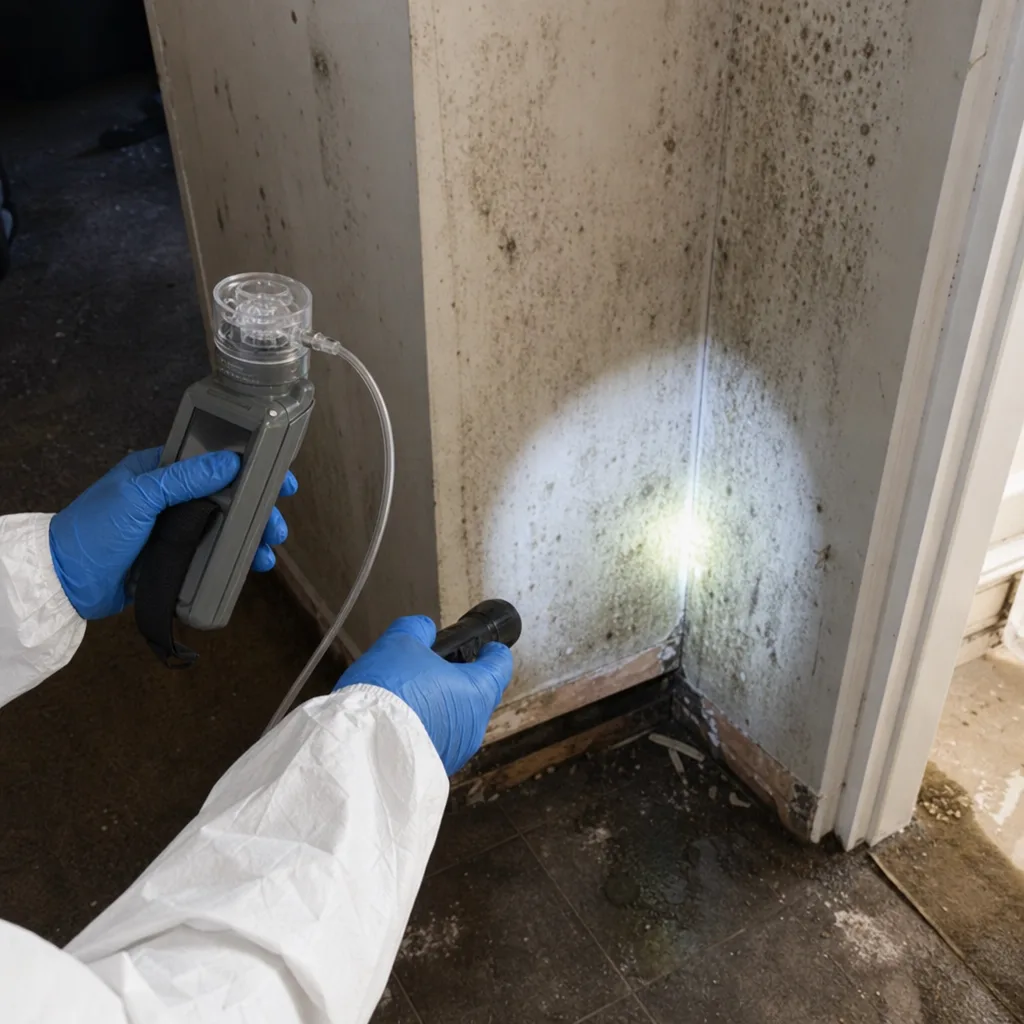
The documentation gap that costs homeowners their claims is not a mystery. It is a predictable failure of contractors to produce records that adjusters can evaluate. We’ve built our practice around closing that gap.
The standard deliverable for every DryMark Restoration Fallbrook project:
- Written scope and price before work begins. Haven Standard, Clause 1. Every line item, every material specification, every labor hour estimated. No scope-creep additions once the crew is inside.
- Daily moisture logs. Psychrometric data recorded with calibrated meters: temperature, relative humidity, specific humidity, vapor pressure, and moisture content of affected materials. These readings document drying progress and justify equipment rental duration.
- Photo record on every visit. Date-stamped, geotagged images of the loss area, the equipment placement, the moisture readings, and any changes in condition. Included as standard, never an upsell.
- Permit and inspection documentation. Copies of all applications, approvals, and sign-offs, with permit numbers and inspector names.
- Material safety documentation. Asbestos survey results, lead test reports, Cal/OSHA notifications, and waste manifests where applicable.
- Final clearance documentation. Post-remediation verification for mold projects, including air sampling results and laboratory chain of custody. Third-party clearance is available at homeowner request.
- Signed 365-Day Done Right Promise. A written warranty under The Haven Standard, not a verbal assurance, with specific remedies and contact procedures.
This documentation serves multiple purposes. It supports the insurance claim with evidence that adjusters can evaluate without dispute. It protects the homeowner’s resale value by creating a record of code-compliant, permitted work. And it provides the baseline for warranty service if any issue arises within the 365-day coverage period.
Our equipment - professional-grade drying systems from Dri-Eaz, Phoenix, and B-Air - produces the environmental data that feeds these logs. The meters are calibrated to IICRC and RIA standards, and the data formats match what major carriers expect to see. This is not marketing distinction; it is the operational standard that turns restoration invoices into payable claims.
For Mold Remediation in Fallbrook, this documentation is particularly critical. Mold claims are among the most disputed in property insurance, and carriers routinely deny coverage for remediation that lacks pre-and-post air sampling, material moisture verification, and containment documentation. Our standard deliverable includes all three.
Common Mistakes to Avoid
- Accepting a verbal permit exemption. If a contractor says work is “permit-exempt,” ask for the specific California Building Code section cited and verify it independently. We’ve seen contractors claim Section 105.2 exemptions for structural subfloor replacement that clearly exceeds the “ordinary repair” limit.
- Skipping asbestos testing in pre-1980 homes. The presumption rule exists because asbestos was ubiquitous in construction materials before 1981. Testing costs $400-$800; abatement after improper disturbance costs $15,000-$50,000. In Fallbrook’s older neighborhoods, this is not optional due diligence; it is mandatory compliance.
- Letting the contractor pull permits in their name only. Permits should name the property owner as the beneficiary, with the contractor as the responsible party. This ensures the inspection record transfers with the property and protects the owner if the contractor becomes insolvent or unresponsive.
- Failing to request final inspection sign-off before final payment. A permit with no final inspection is functionally worthless. It creates the same resale and coverage problems as no permit at all. Structure final payment to receipt of the signed final inspection card.
- Assuming insurance will cover unpermitted work retroactively. Carriers do not backfill permit compliance. If work proceeds without required permits, the homeowner bears the cost of bringing it into compliance, and the carrier may deny the original claim portion related to that work.
- Ignoring Cal/OSHA notification requirements for commercial properties. Multi-family residential buildings with more than four units and all commercial structures require Cal/OSHA notification before asbestos disturbance. Failure to notify can result in stop-work orders and fines that delay project completion by weeks.
When to Call a Professional
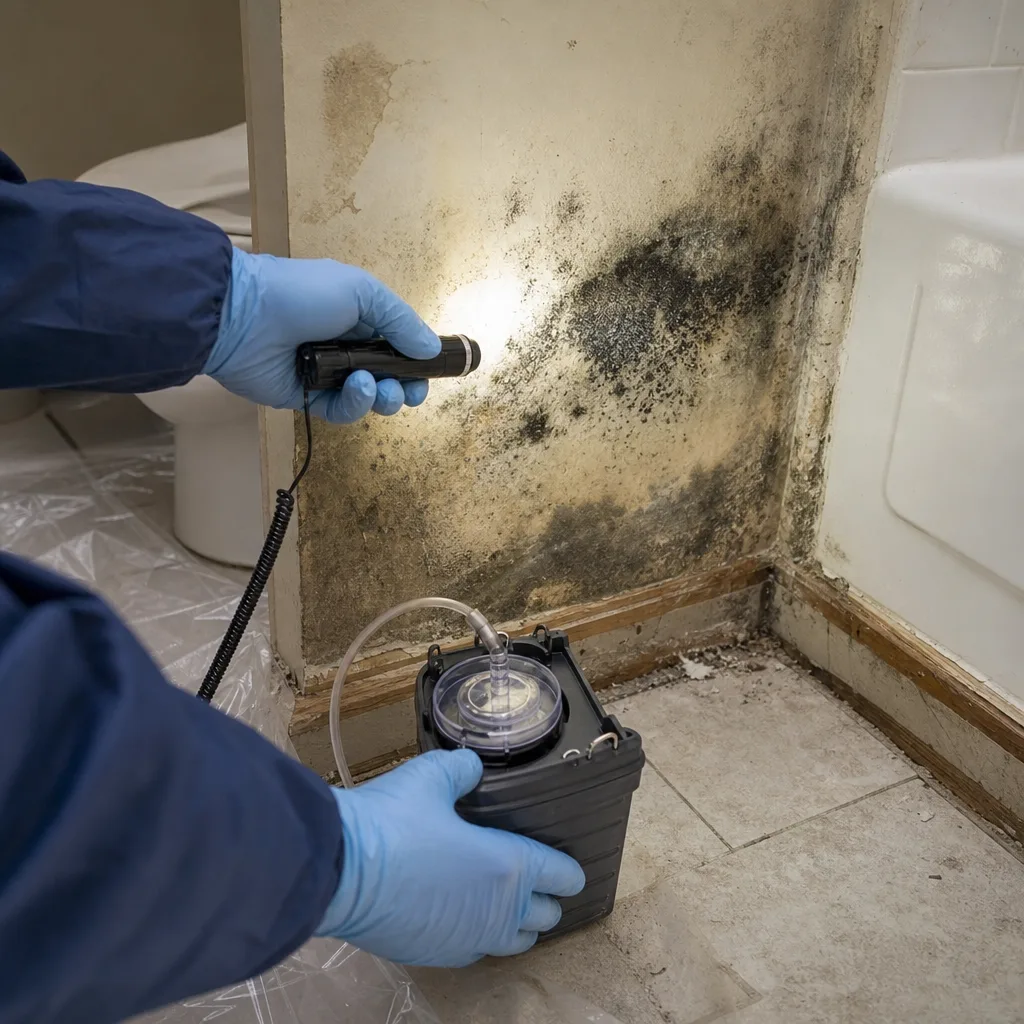
Call a professional when any of the following apply: the water damage involves structural materials (subfloor, wall studs, ceiling joists); the fire damage requires reconstruction of any building element; the home was built before 1981 and demolition is contemplated; electrical, plumbing, or HVAC systems are affected; mold growth exceeds 10 square feet or is in the HVAC system; or you need documentation that will satisfy an insurance adjuster or support a future property sale. Still unsure whether to DIY? Our DIY vs Professional Damage Restoration: The Fallbrook Homeowner’s Decision Guide can help.
DryMark Restoration Fallbrook offers free estimates in Fallbrook - call (760) 421-5658. Every estimate includes a written scope and price before any work begins, identification of permit-required work, and a clear explanation of the documentation you will receive. We also provide a Free Second Opinion on any competitor’s written estimate at no charge.
Frequently Asked Questions
No. Water extraction, drying, and surface cleaning typically do not require permits. Any repair involving structural elements, electrical systems, plumbing, or HVAC does require a permit in San Diego County. Call (760) 421-5658 for a written scope that identifies which portions of your job are permit-exempt and which require filing.
If your home was built before 1981, Cal/OSHA presumes asbestos-containing materials are present. A qualified asbestos consultant must survey suspect materials before demolition or renovation. For homes built 1981-1990, a qualified person must assess whether materials contain asbestos. Laboratory analysis is the only definitive method. We coordinate this testing as part of our standard scope when the construction date triggers regulatory thresholds.
Probably not for the unpermitted portion, and possibly not at all. Most carriers treat unpermitted work as material misrepresentation or defective construction, both standard exclusions. Unpermitted work can also void coverage for subsequent related claims, such as mold developing from improperly repaired water damage. We document permit compliance explicitly to prevent this outcome.
For structural repairs and reconstruction, a B-General Building Contractor license is required. Trade-specific work requires the matching classification: C-36 for plumbing, C-10 for electrical, C-20 for HVAC. No specific license is required for mold cleaning, but structural demolition during mold remediation requires the appropriate construction license. Verify any license at cslb.ca.gov.
Search San Diego County’s public permit portal by property address or permit number. Request the permit application number from your contractor before work begins, then verify issuance, inspection scheduling, and final approval independently. We provide all permit documentation as part of our standard project closeout.
You should receive: the final written scope and invoice, all permit and inspection records, daily moisture logs or drying documentation, a date-stamped photo record, any material safety testing results, and a written warranty. Our standard deliverable under The Haven Standard includes all of these, plus the signed 365-Day Done Right Promise.
The Bottom Line
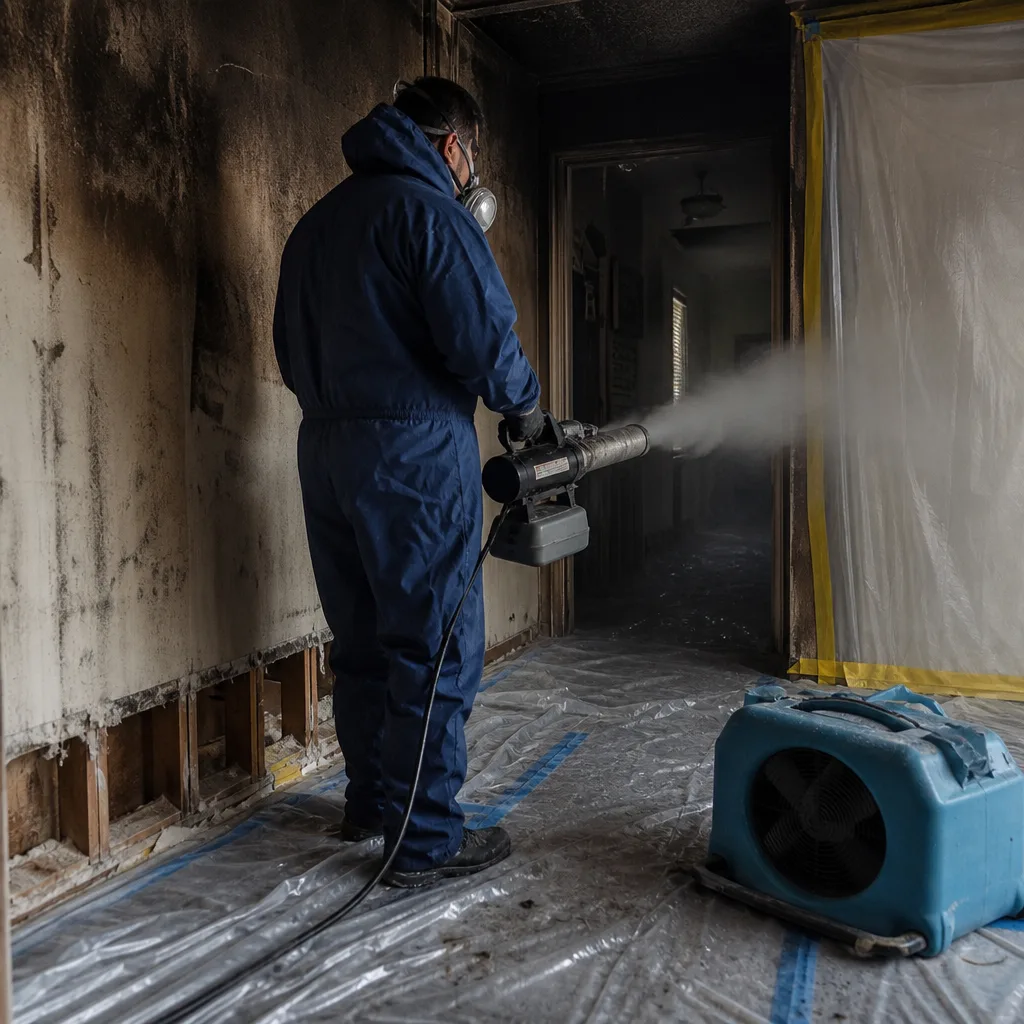
California’s permit and code requirements for restoration work are specific, enforceable, and frequently ignored by contractors who prioritize speed over compliance. The homeowner bears the consequences: denied insurance claims, Cal/OSHA liability, failed resale inspections, and repair costs that multiply when unpermitted work must be redone. In Fallbrook’s older housing stock, the asbestos and lead testing requirements alone separate compliant contractors from those cutting corners. The documentation that protects you - permits, inspections, test results, and photo records - is not an upsell. It is the minimum standard for work that will stand up to adjuster review, regulatory scrutiny, and the passage of time. Demand it in writing before anyone starts work.
Written by Alicia Brennan, Owner at DryMark Restoration Fallbrook, serving Fallbrook since 2011.