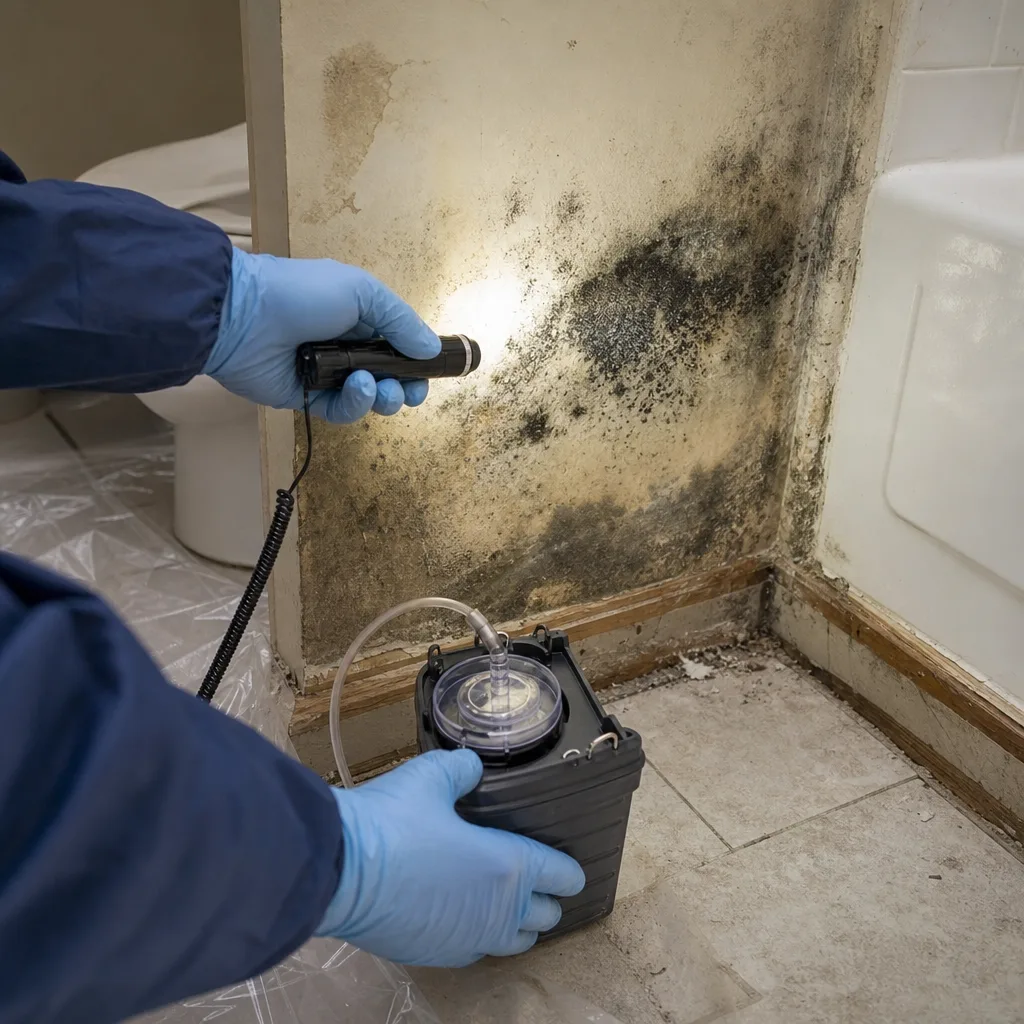
Free visual inspection and a written scope of work before any mitigation begins - photos, moisture readings, and drying logs go in your claim file
The scope we write is the scope we bill. Anything new gets shown to you, in writing, before we touch it.

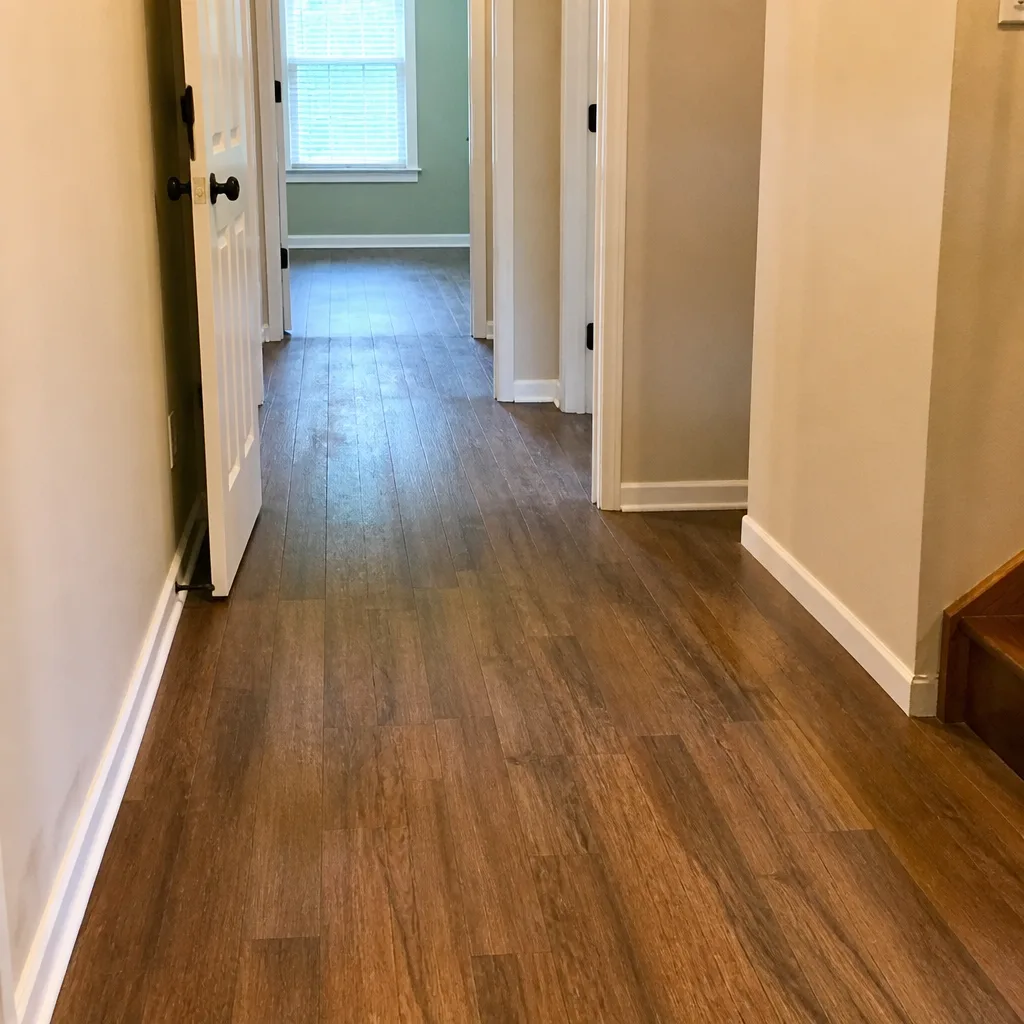

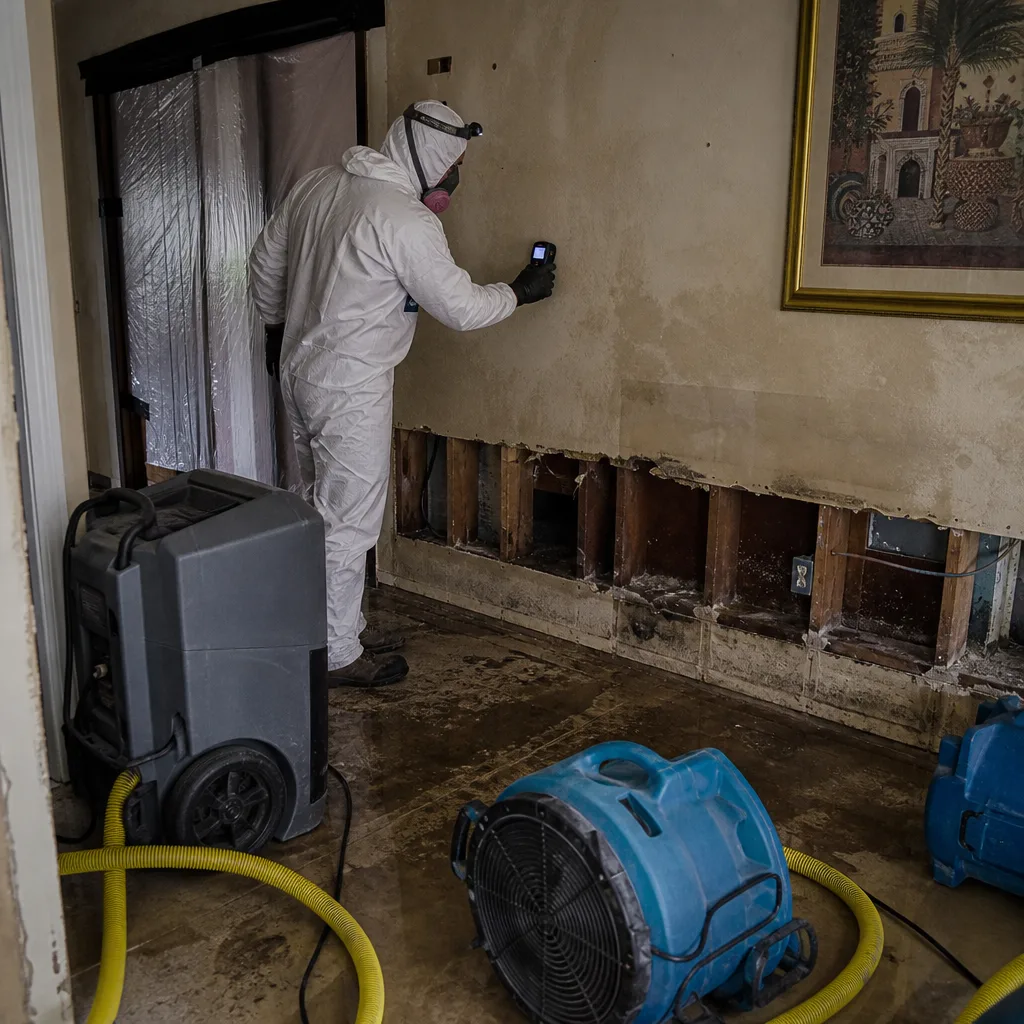 Before
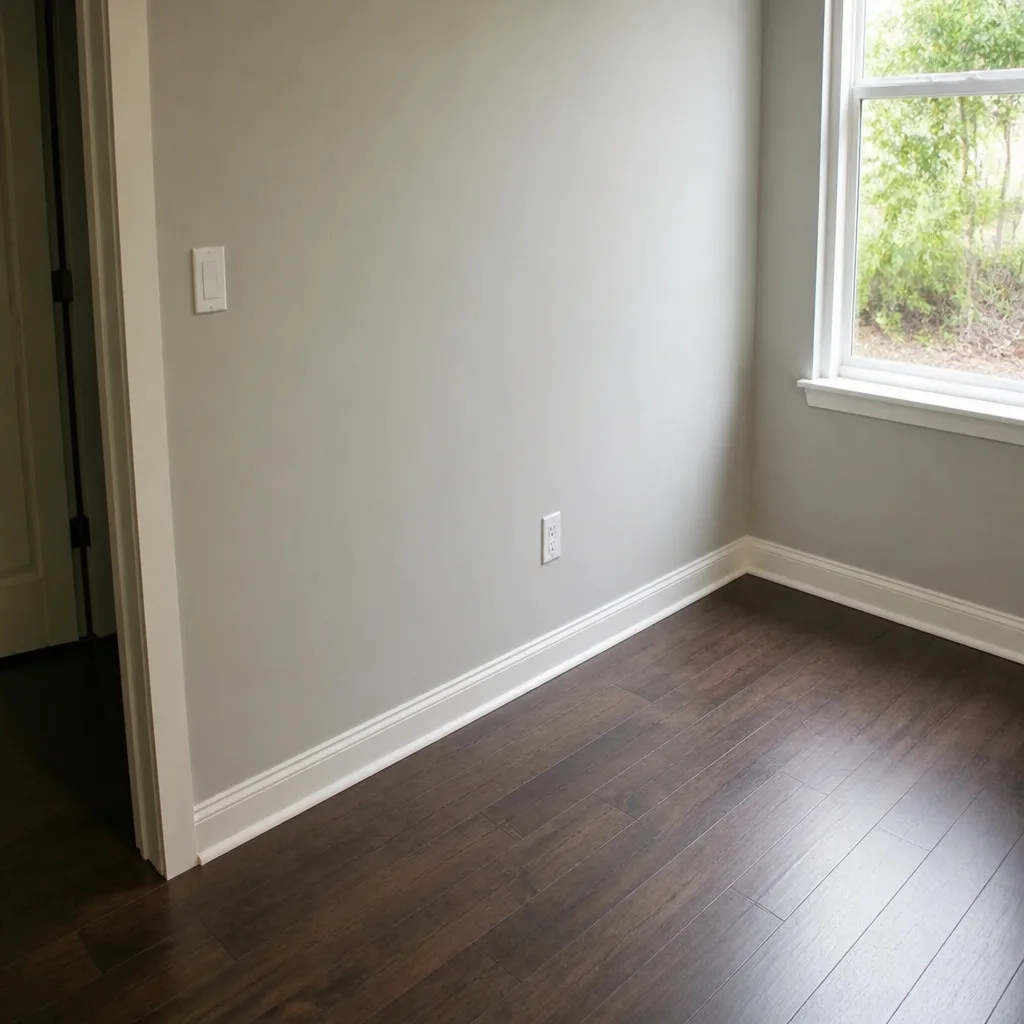 After
After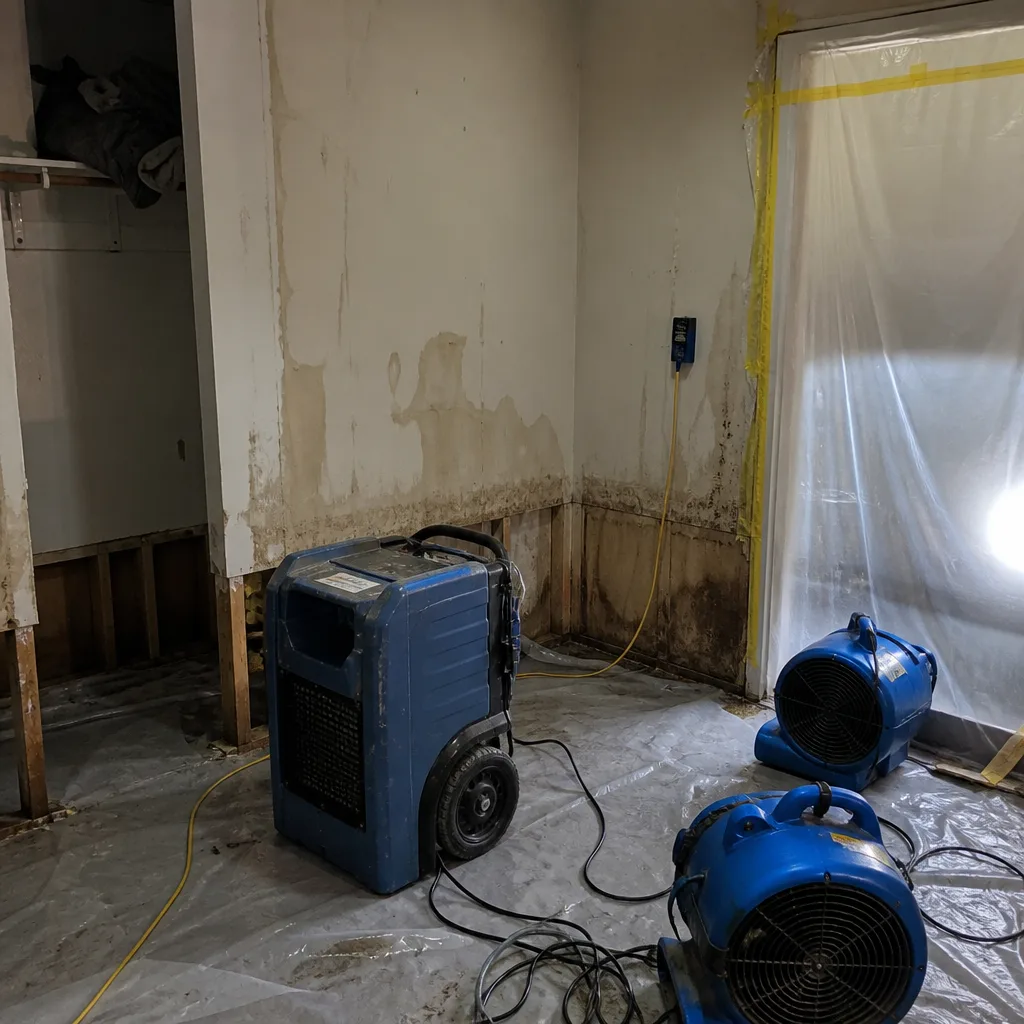 Before
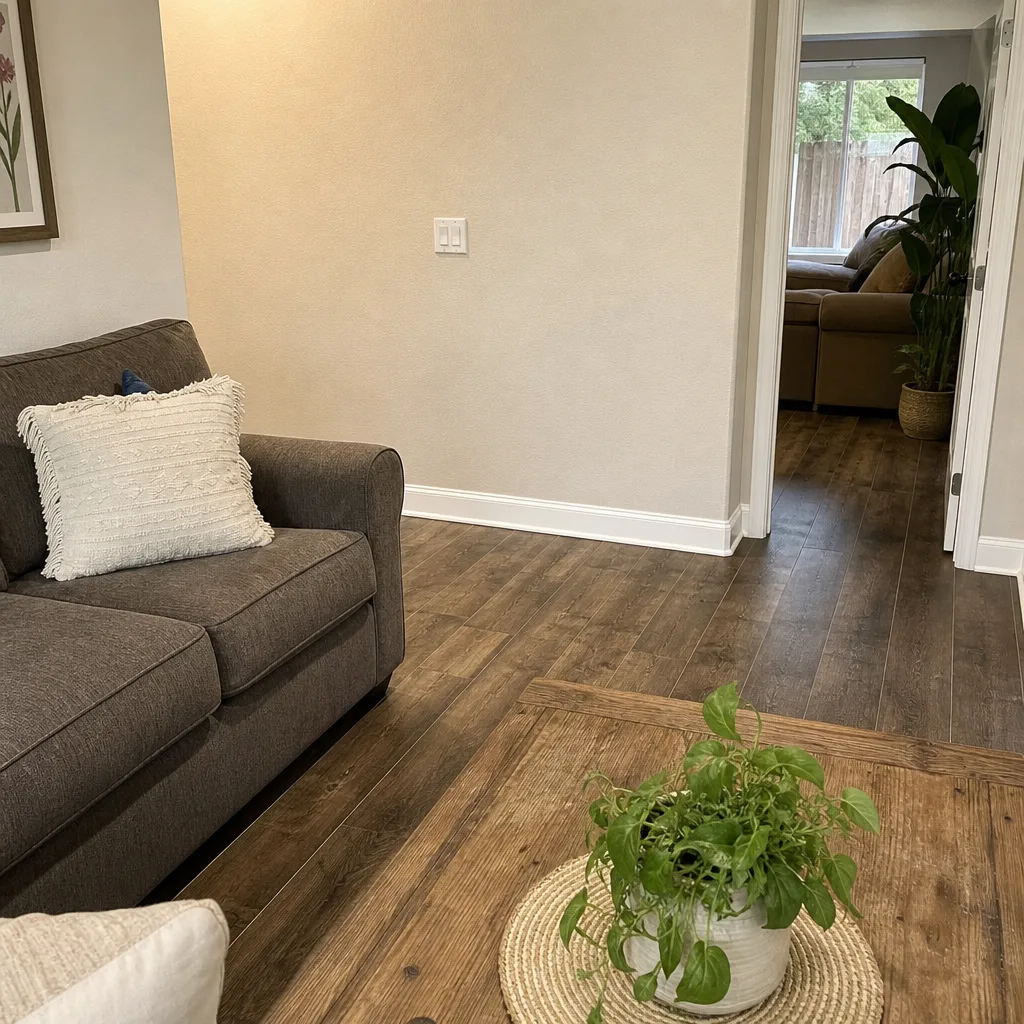 After
After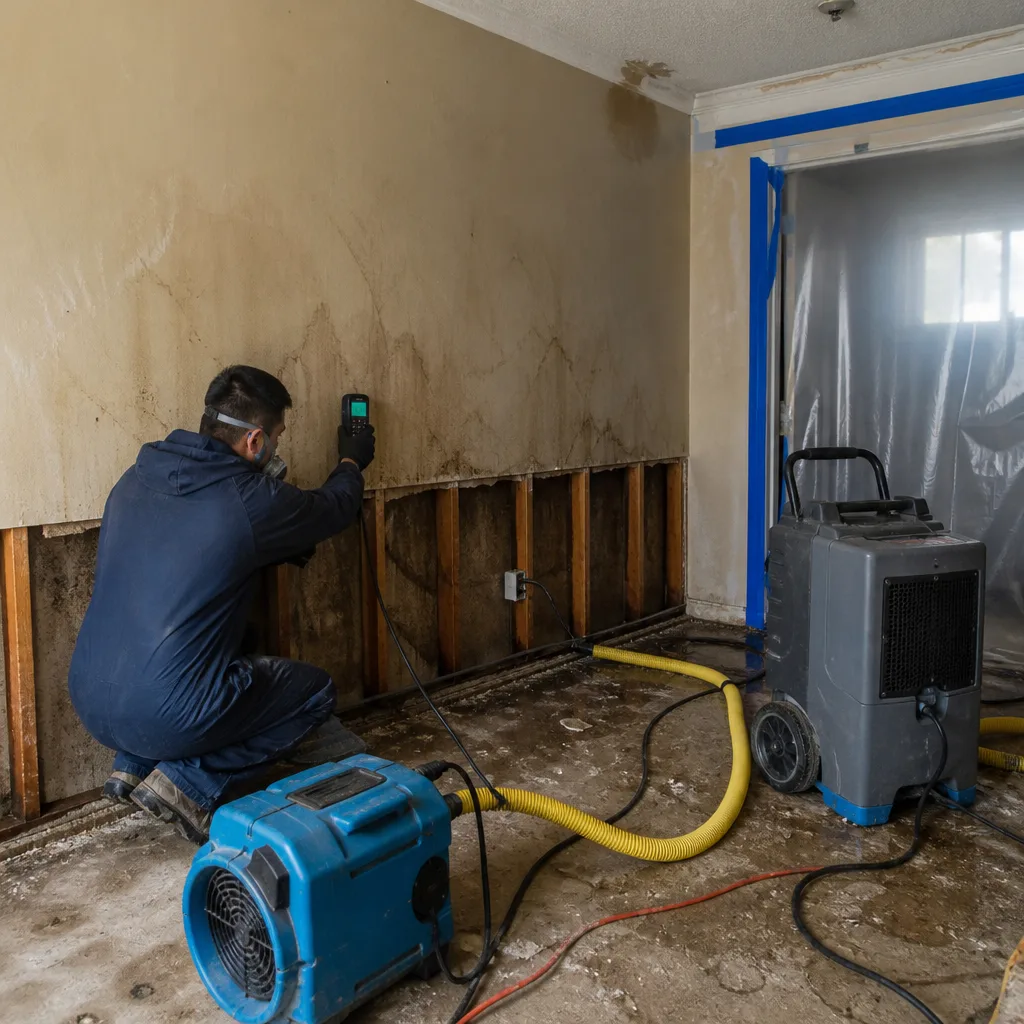 Before
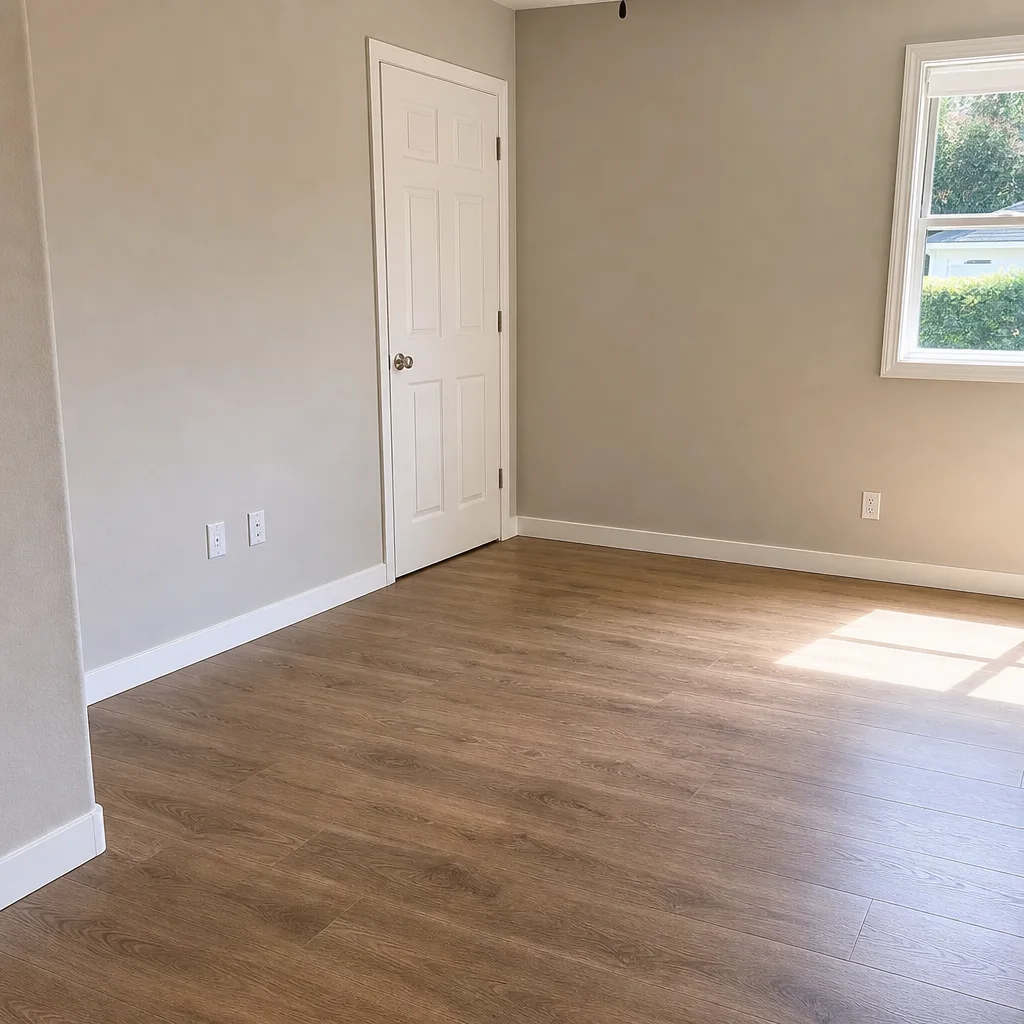 After
After24/7 Emergency Mold Remediation in Vista
Mold remediation in Vista typically costs $1,800-$6,500 depending on containment area and material removal, and our crews are dispatched from our San Diego office with same-day response across the Vista area. Call (760) 421-5658 - a live person answers, 24 hours a day, no voicemail trees. The first 48 hours after water intrusion are when mold colonizes drywall and framing; after that, you’re looking at demolition, not drying. We offer a free visual inspection to map moisture and define containment before any work starts.
We serve Vista properties from the hillside graded lots near Guajome Regional Park to the manufactured home communities along East Vista Way. Our Mold Remediation team carries IICRC AMRT (Applied Microbial Remediation Technician) certification and arrives with moisture meters, thermal imaging, and HEPA containment equipment already loaded.
Understanding Mold Remediation Severity in Vista Properties
Mold severity is classified by affected square footage, material porosity, and whether the growth is contained to a single room or has migrated through wall cavities and HVAC systems. Category 1 contamination covers less than 10 square feet of non-porous surfaces - think tile or sealed concrete - and responds to surface treatment with HEPA vacuuming and antimicrobial application. Category 2 spans 10-100 square feet, often involving porous materials like drywall, insulation, or carpet padding that must be removed and discarded under negative-air containment. Category 3 exceeds 100 square feet or involves HVAC contamination, requiring full containment with air scrubbers, personal protective equipment, and post-remediation clearance testing by a third-party hygienist.
Vista’s housing stock drives our severity assessments. The 1950s-1970s stucco-over-wood-frame tract homes in the older core neighborhoods have minimal original vapor barriers and aging galvanized supply lines; once moisture breaches the envelope, it travels fast through stud bays. Manufactured homes present a separate classification entirely - belly-wrap vapor barriers trap Category 2 water under the subfloor, and standard moisture readings from the living space often miss chassis-level saturation that pushes mold into Category 3 territory without visible warning. Hillside properties on graded lots add foundation-wall cracking from expansive clay soil heave, creating chronic moisture pathways that reclassify what looks like a single-room problem into a whole-structure drying protocol.
Why Vista Property Owners Choose DryMark Restoration Fallbrook
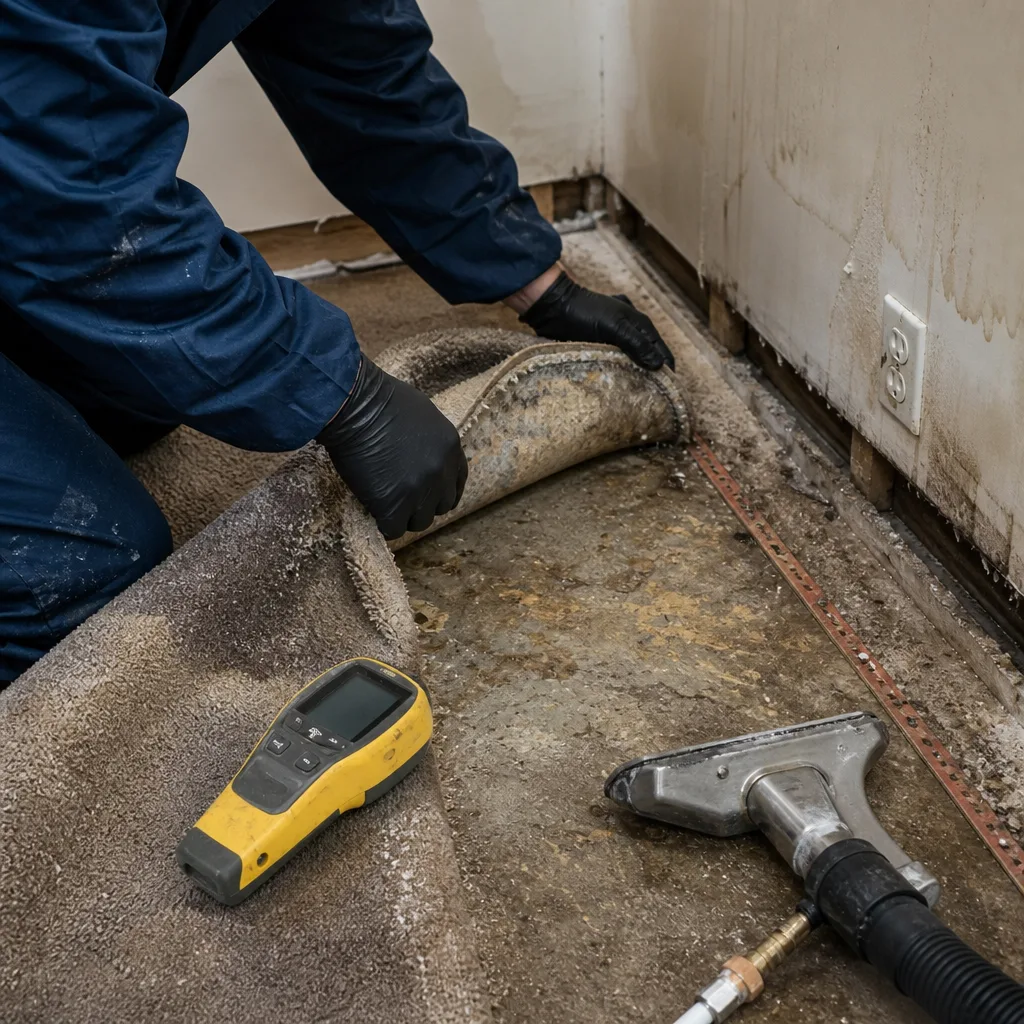
- 45-minute response commitment to Vista addresses from our San Diego dispatch center, with crews carrying AMRT-certified technicians and negative-air equipment on every truck.
- 24/7 live answer - a real person, never an automated system; emergency lines ring through to our operations center with no voicemail trees or next-business-day callbacks.
- IICRC-certified crews holding WRT (Water Damage Restoration Technician), FSRT (Fire & Smoke Restoration Technician), and AMRT credentials, with license numbers documented on every job file.
- Free visual inspection including moisture mapping, thermal imaging scan, and written scope before any containment is erected or material is removed.
- Direct insurance billing with photo-documented assessments, daily drying logs, and adjuster coordination handled by our in-house claims team.
- One team from extraction to reconstruction - no handoffs between mitigation and rebuild contractors, no gaps in documentation that stall claim payment.
BeforeAfterOur Mold Remediation Process
1. Inspection & Assessment
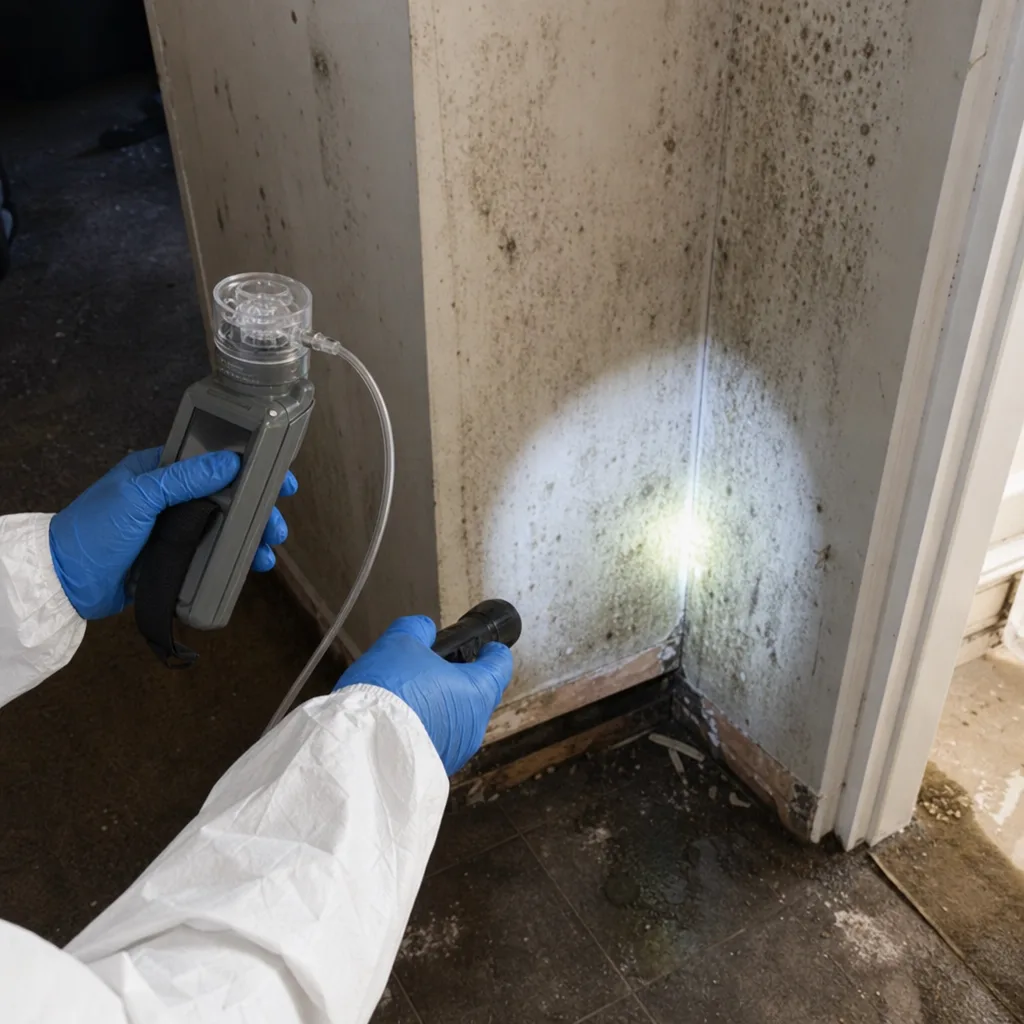
We map moisture with thermal imaging and penetrating meters, identify the water source, and classify contamination level. In Vista’s older stucco homes, we pay special attention to wall cavities behind exterior walls where marine-layer humidity accumulates. You receive a written scope and firm price before any work begins - Haven Standard, Clause 1.
2. Containment & Air Filtration
We erect polyethylene containment barriers and run HEPA air scrubbers at negative pressure to prevent spore migration. For manufactured homes, we often need to create secondary containment around belly-wrap access points where chassis-level moisture has been trapped.
3. Moisture Source Elimination
Active leaks are repaired or stabilized, and standing water is extracted. On Vista’s hillside lots, this step frequently reveals foundation wall cracking or slab heave from expansive clay soils - damage that must be addressed before drying begins or mold returns within months.
4. Drying & Dehumidification
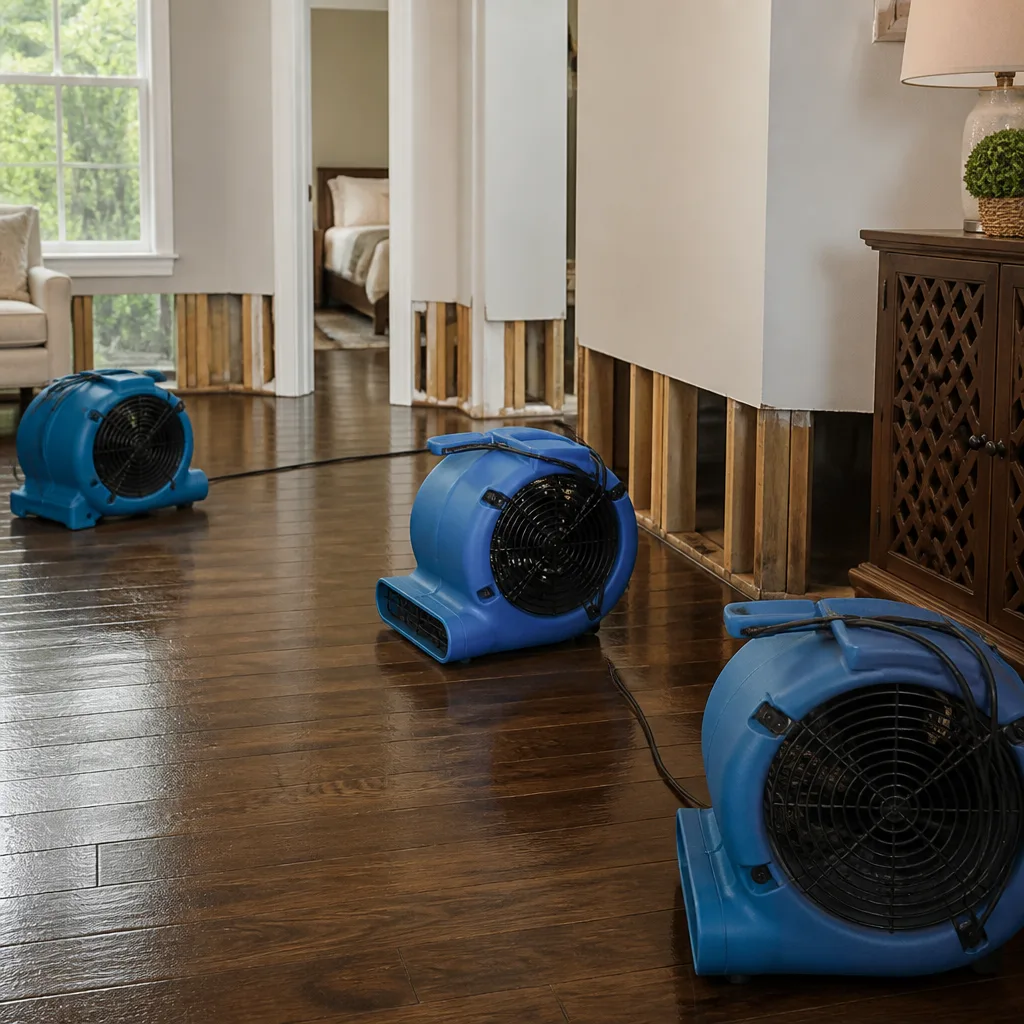
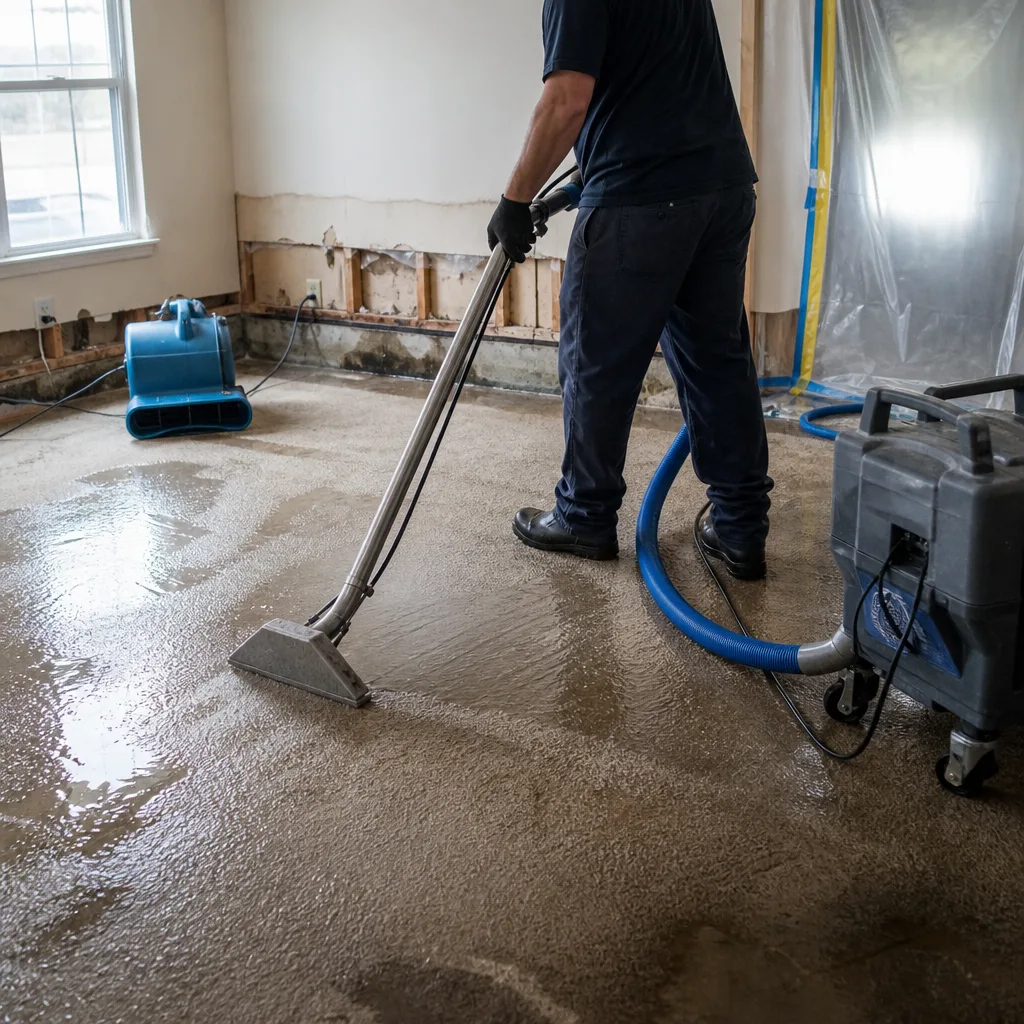
We deploy Phoenix and Dri-Eaz LGR dehumidifiers, B-Air air movers, and Injectidry mat systems for hardwood and subfloor cavities. Psychrometric data - temperature, relative humidity, and vapor pressure differential - is logged daily to document progress for your insurer.
5. Cleaning, Sanitization & Antimicrobial Treatment
HEPA vacuuming removes settled spores from non-porous surfaces, followed by antimicrobial application per IICRC S520 standards. For manufactured-home belly-wrap cavities, we apply specialized treatments that penetrate OSB subflooring without compromising the vapor barrier’s integrity.
6. Post-Remediation Verification & Restoration
Clearance testing confirms airborne spore counts at or below outdoor baseline levels. We then restore removed materials - drywall, insulation, flooring - with the same crew, same documentation standard, and the 365-Day Done Right Promise stamped on every invoice.
Need Emergency Mold Remediation in Vista Now?
Crews minutes away, answering live 24 hours a day. The sooner we start, the less it costs.
Working With Your Insurance Company
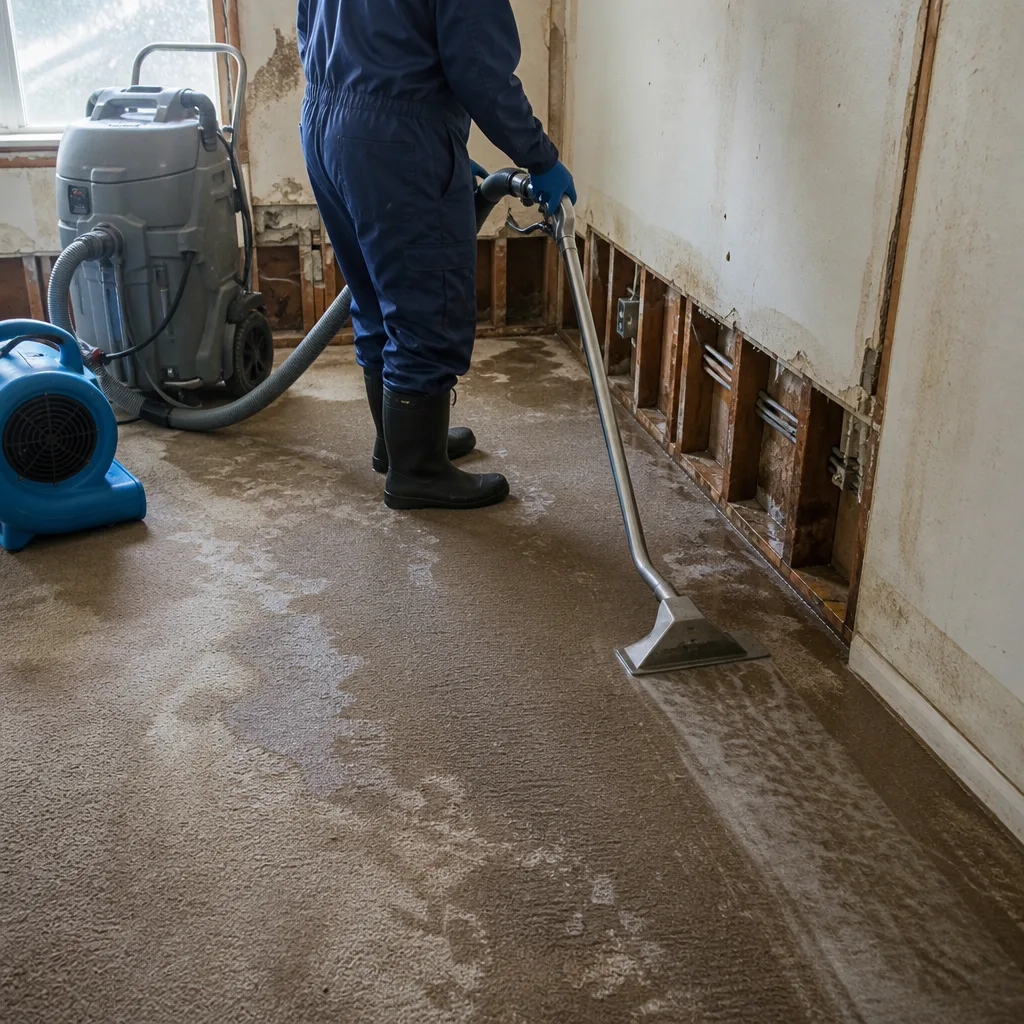
Insurance claims for mold damage live or die on documentation. We learned this from our founder’s years as a claims adjuster - the single most common reason a mold remediation invoice gets reduced or denied is a gap between the moisture event and the documented response. Our protocol closes that gap from the first hour.
We photograph every room on every visit, not just the affected area. We record moisture readings with make, model, and calibration date of each meter. We produce daily drying logs showing psychrometric conditions and equipment placement. Our scopes are line-item detailed, not lump-sum estimates, and we coordinate directly with your adjuster rather than handing you a bill to submit alone. If your carrier has questions, we answer them with data.
What We Provide Your Insurer
- Thorough documentation of the loss
- Photos of all damage, room by room
- Moisture readings and drying logs
- A detailed, line-item scope of work
- Direct coordination with your carrier
Built for Vista’s Loss Calendar
Vista’s mold season doesn’t follow a simple calendar - it’s shaped by the collision of two weather patterns against local topography. January through March brings the first heavy winter rains after months of dry contraction; expansive clay soils on graded hillside lots swell unevenly, cracking foundation walls and slab perimeters that stayed stable all summer. We see a spike in “water intrusion” calls during these weeks that moisture mapping reveals as full cavity contamination with mold colonization already active behind baseboards.
April through June, the marine layer pushes deepest inland, stalling against Vista’s hillside topography where Carlsbad and San Marcos stay drier. Attic and wall-cavity humidity readings climb even without active leaks. Santa Ana wind events in September and October create rapid drying conditions that can mask residual moisture in deep cavities - a homeowner thinks the problem solved, but mold rebounds by January when humidity returns. We adjust our drying protocols seasonally: aggressive dehumidification and vapor pressure management during marine-layer months, slower staged drying with repeated verification during Santa Ana periods to prevent false-negative moisture readings.
Mold Remediation Across Vista’s Neighborhoods
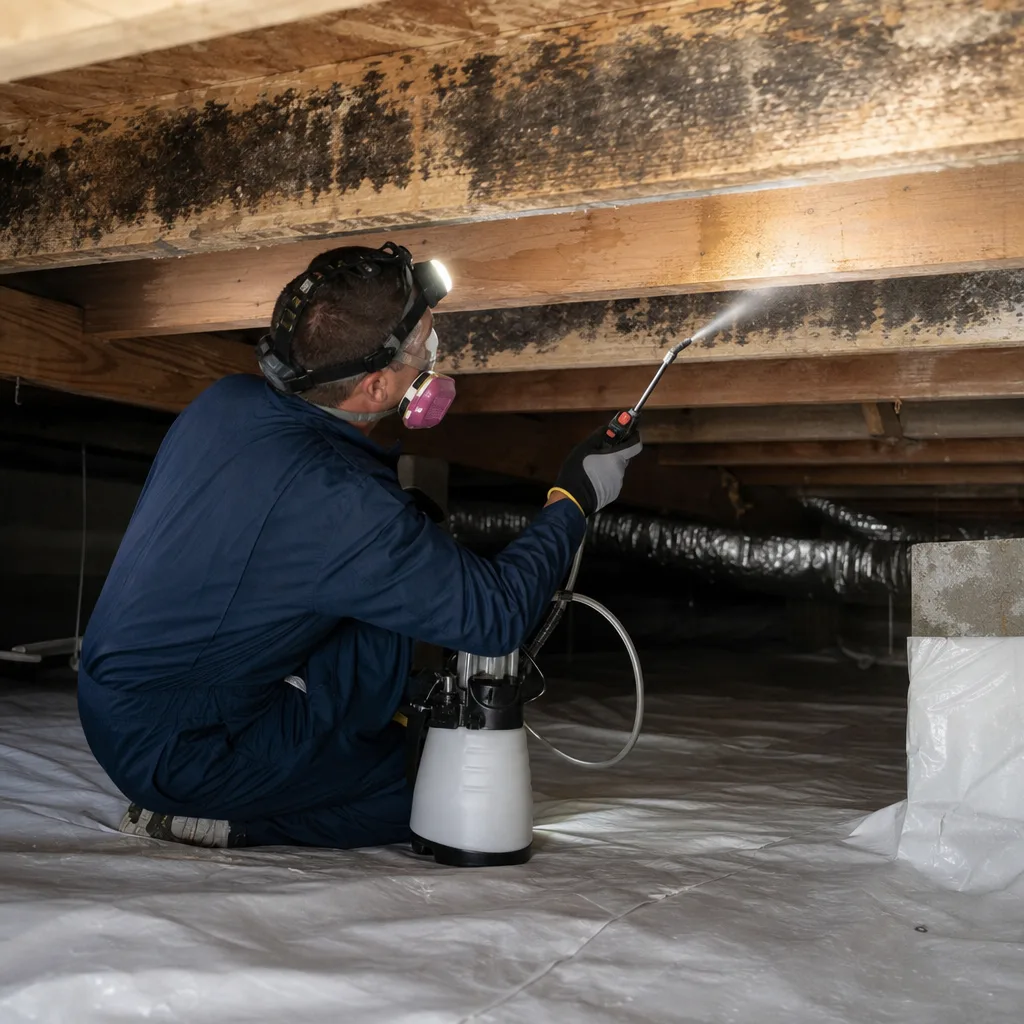
We respond throughout Vista’s distinct zones, and each carries its own mold risk profile.
Downtown Vista and the historic core near South Santa Fe Avenue and the old Highway 395 corridor: 1950s-1970s stucco tract homes with original galvanized plumbing and minimal attic ventilation. We regularly find mold in bathroom wall cavities where decades of slow supply-line seepage has saturated stud bays without ever showing surface staining.
The manufactured home parks along East Vista Way and north of Bobier Drive: Vista has among the densest concentrations of manufactured housing in North County San Diego. Belly-wrap vapor barriers, non-standard subfloors, and chassis-level water intrusion create mold patterns standard residential protocols miss entirely. We were called to a manufactured home in the Vista Mobile Home Park off East Vista Way where a Category 2 supply-line leak had soaked the belly wrap. Moisture readings under the subfloor climbed past 20% and the chassis fasteners were already corroding. We pulled the contaminated insulation, ran Injectidry mats and Phoenix dehumidifiers to dry the cavity, and applied an antimicrobial treatment before closing it back up.
Hillside properties near Guajome Regional Park and the Wildwood area: Graded lots on expansive clay soils with slab-on-grade construction. The mold call is almost never just mold - it’s slab heave or foundation wall cracking that opened a moisture pathway, and the remediation scope runs to structural drying, crack injection, and waterproofing before clearance testing is even relevant.
The Shadowridge and Vista Business Park corridor: Newer construction with better vapor barriers but tighter building envelopes that trap humidity from HVAC imbalances. We see mold in return-air plenums and closet cavities where conditioned air doesn’t circulate effectively.
Specialized Mold Remediation Services We Offer in Vista
Mold Inspection & Testing
Our inspections combine thermal imaging, penetrating moisture meters, and air sampling where indicated. In Vista’s marine-layer climate, we focus on attic sheathing and exterior wall cavities where humidity accumulates even when interior readings appear normal. Visual inspection is free; air and surface sampling to a third-party lab runs $350-$650 depending on sample count.
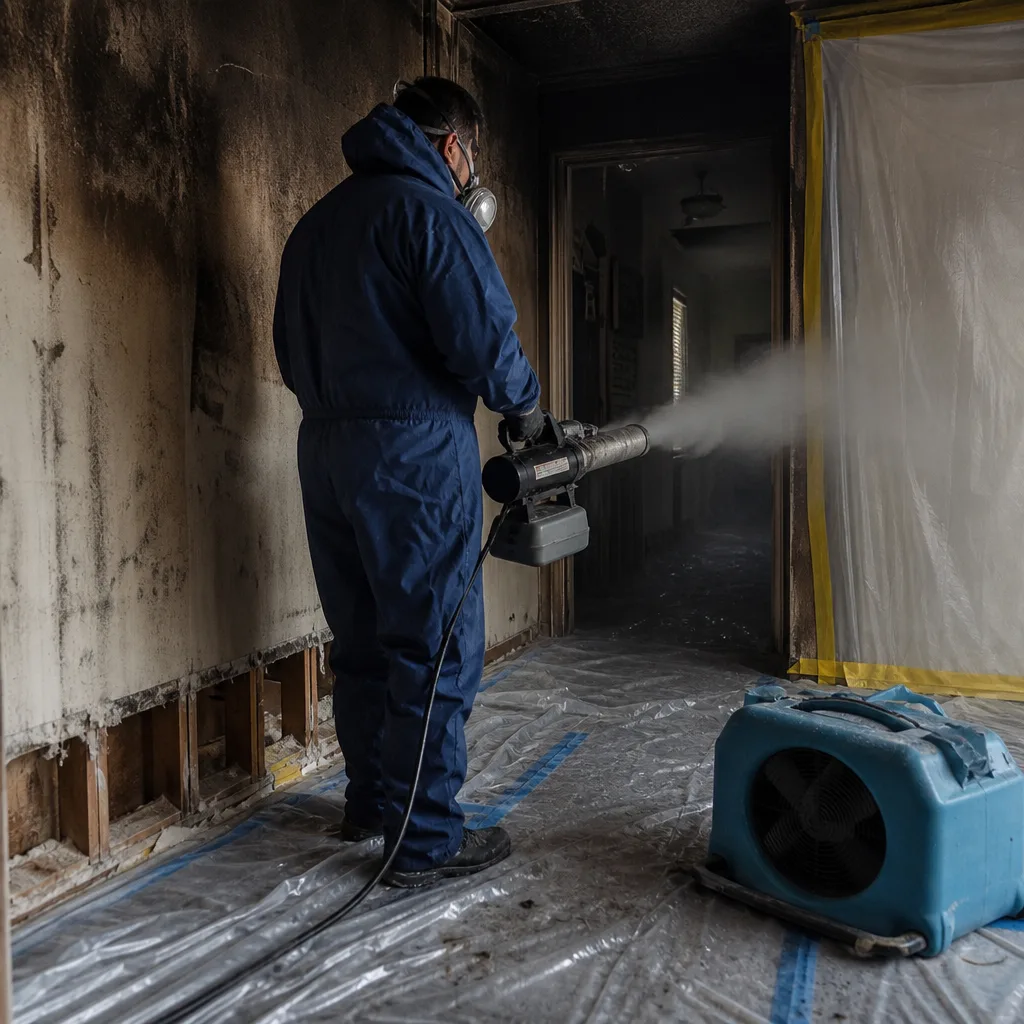
Mold Removal
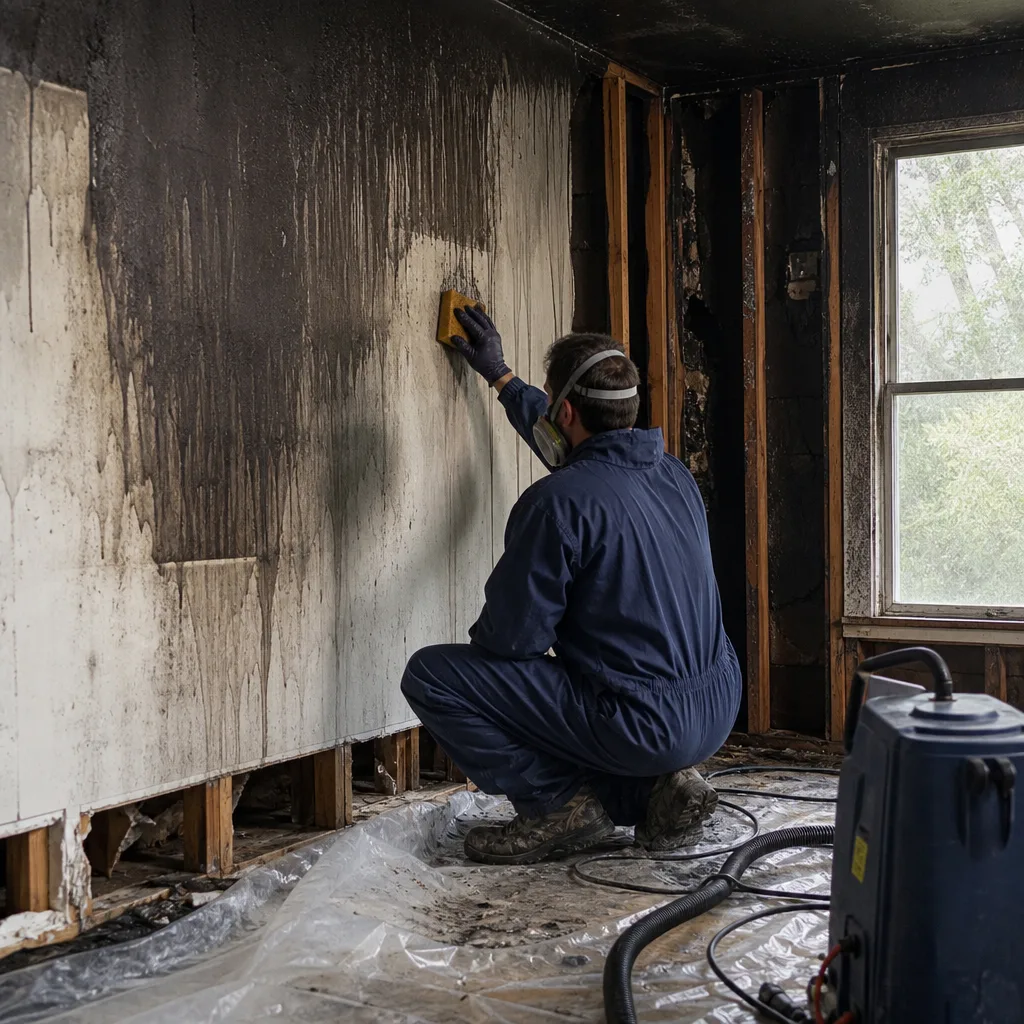
Containment, HEPA filtration, and controlled demolition of contaminated porous materials per IICRC S520. For Vista’s older stucco homes, we frequently need to open exterior walls from the interior to access cavity mold without compromising the stucco envelope - a technique that preserves the weather barrier while allowing complete remediation.
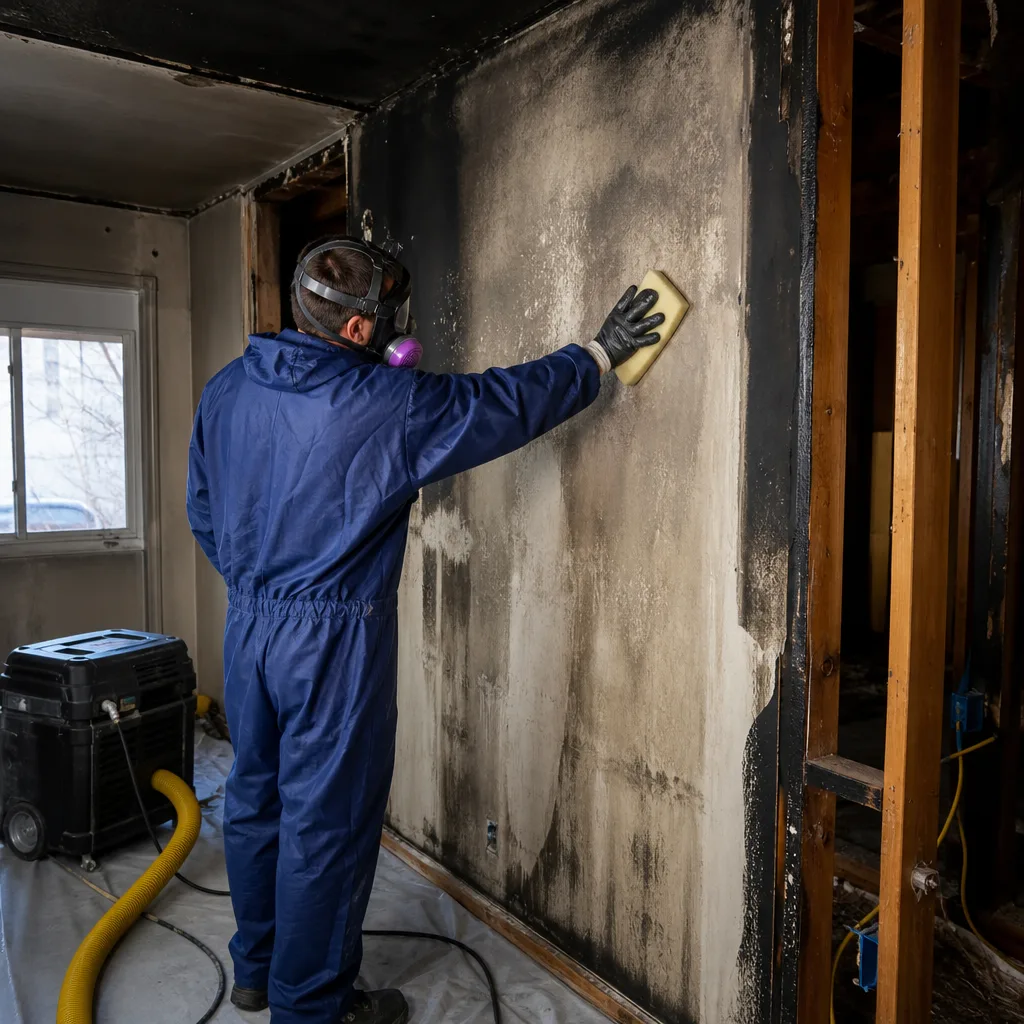
Black Mold Remediation
Stachybotrys chartarum and other toxigenic species require enhanced PPE, strict containment, and specialized disposal. We do not perform “black mold testing” as a standalone scare tactic - we test when health symptoms or visual indicators warrant it, and we remediate to clearance standards regardless of species identification.
Air Quality Restoration
HEPA air scrubbing, duct cleaning where HVAC contamination is confirmed, and post-remediation verification sampling. In Vista’s tighter new construction, we pay particular attention to pressure balancing and ventilation rates that prevent re-accumulation of airborne spores.
Crawl Space Treatment
Vista’s hillside homes and some older tract construction have vented crawl spaces that become moisture reservoirs. We install vapor barriers, dehumidification, and sealed conditioning where appropriate - transitioning from vented to closed-crawl systems that eliminate the conditions mold requires.
Moisture & Humidity Control
Long-term mold prevention requires controlling vapor pressure differential, not just reacting to visible growth. We specify and install permanent dehumidification, grade drainage improvements, and foundation waterproofing - particularly critical on Vista’s expansive clay soil lots where seasonal soil movement creates recurring moisture pathways.
What happens when you call
- 1
A real person answersNo phone trees - you reach a local pro.
- 2
You get an upfront price rangeHonest numbers before anyone is dispatched.
- 3
A background-checked tech heads outLicensed & insured, dispatched right away.
- 4
You approve before work beginsNothing starts until you say go.
Mold Remediation Costs in Vista, CA
| Service | Typical Range in Vista |
|---|---|
| Visual mold inspection | Free |
| Air/surface sampling (third-party lab) | $350-$650 |
| Category 1 remediation (under 10 sq ft, non-porous) | $1,800-$2,800 |
| Category 2 remediation (10-100 sq ft, some demolition) | $3,200-$5,500 |
| Category 3 remediation (100+ sq ft, full containment) | $5,500-$12,000+ |
| Manufactured home belly-wrap cavity remediation | $4,000-$7,500 |
| Crawl space treatment with vapor barrier | $3,500-$6,000 |
| Post-remediation clearance testing | $400-$750 |
What moves the price: square footage of containment, amount of porous material requiring removal (drywall, insulation, carpet pad), accessibility of cavities, and whether the moisture source has been resolved or still needs repair. Insurance typically covers mold remediation when it results from a sudden, accidental water event - burst pipe, appliance failure, storm intrusion - but may exclude long-term maintenance issues or pre-existing conditions. We review your policy language and document the loss origin to support coverage determination. Call (760) 421-5658 for a free inspection and written scope - Haven Standard, Clause 1, no exceptions.
We Also Serve Cities Near Vista
Our crews respond throughout North County San Diego from the same San Diego dispatch center, with the same equipment and documentation standards: San Marcos to the northeast, Carlsbad to the west along the 78 corridor, Oceanside to the southwest, and Encinitas to the south. Each city has distinct mold patterns - Carlsbad’s coastal exposure differs from Vista’s inland valley humidity - and our protocols adjust accordingly.
Serving Vista, CA - Our Local Coverage Area
We’re based in the Vista area and know this community well. Use the map below to see our service coverage - if you’re nearby, we can almost certainly help.
Vista Mold Remediation Questions, Answered
Why does mold keep coming back in my Vista manufactured home after we dry it?
Trapped moisture under the belly-wrap vapor barrier is the cause in nearly every case we see. Standard drying equipment blows air through the living space but doesn’t reach the chassis cavity where water pools against the OSB subfloor and insulation. We use Injectidry mat systems and targeted dehumidification to dry the belly-wrap space, then verify with penetrating meters before we close the job. Call (760) 421-5658 if you’ve had a rebound - we’ll inspect at no charge and show you the readings.
How does Vista’s marine layer affect mold growth compared to Carlsbad or San Marcos?
Vista’s inland valley position traps marine-layer humidity against hillside topography, creating persistent low-level moisture that Carlsbad’s direct coastal ventilation and San Marcos’s more open terrain don’t experience at the same intensity. We routinely find attic and wall-cavity mold in Vista homes where interior humidity reads normal and the same construction in Carlsbad stays dry. Our moisture mapping protocol for Vista properties includes cavity probes as standard, not optional. Call (760) 421-5658 for cavity-specific inspection.
Our garage door springs and opener chain are rusting out fast - is that connected to mold?
Same root cause: coastal salt-air corrosion and trapped humidity. The marine layer that rusts your garage hardware in Vista also feeds wall-cavity mold growth behind and above the garage, particularly in homes with attached garages that share attic space with living areas. We’ve opened garage-adjacent wall cavities and found active mold colonization while the homeowner was calling about a spring replacement. If you’re seeing accelerated corrosion, it’s worth a moisture inspection of the shared walls. Call (760) 421-5658 - we’ll map it.
What is the mold risk after a slab heave or foundation crack on Vista’s clay hillside lots?
High, and often delayed. Expansive clay soils swell after the first heavy winter rain, cracking foundation walls and opening pathways that don’t show interior water until mold is already active in the cavity. We treat these calls as full-structure assessments, not spot remediation - the visible stain is rarely the full extent. Moisture mapping, thermal imaging, and sub-slab readings are standard on every Vista hillside foundation call. Call (760) 421-5658 for assessment - the inspection is free and the scope is written before any work starts.
How quickly can mold start after a water leak in a Vista home?
Under Vista’s typical indoor conditions - 60-75°F with the humidity spikes common during marine-layer periods - mold colonization on drywall and organic substrates begins in 24 to 48 hours. On cellulose insulation or water-soaked OSB subflooring in manufactured homes, we’ve seen active growth at 36 hours. Speed of response matters more than any other variable. Our 45-minute dispatch commitment to Vista exists because the first two days determine whether we dry or demolish. Call (760) 421-5658 for immediate response.
Will my insurance cover mold remediation in Vista?
Coverage depends on the water source and your policy language. Sudden, accidental events - burst pipe, appliance failure, storm intrusion - typically trigger coverage when documented properly. Long-term leaks, maintenance neglect, or pre-existing conditions often don’t. We document the loss origin from the first hour with photos, moisture readings, and written scope to support your claim, and we coordinate directly with your adjuster. Bring any competitor’s written estimate for our Free Second Opinion review. Call (760) 421-5658 to start documentation.
Can my family stay in the home during mold remediation?
For Category 1 contamination under 10 square feet in a contained area, often yes. For Category 2 or 3, or any toxigenic species involvement, we recommend temporary relocation until clearance testing confirms safe re-occupancy. We don’t make this recommendation lightly - it’s based on IICRC S520 guidelines and documented health risk assessment, not precautionary overreach. If relocation is needed, we document the recommendation and timeline for your insurer. Call (760) 421-5658 to discuss your specific situation.
What certifications do your Vista mold remediation technicians hold?
Our lead technicians hold IICRC AMRT (Applied Microbial Remediation Technician), WRT (Water Damage Restoration Technician), and FSRT (Fire & Smoke Restoration Technician) credentials. All are background-checked, uniformed, and licensed with numbers documented on every job file. Equipment is maintained to manufacturer specification - Phoenix, Dri-Eaz, and B-Air dehumidifiers; HEPA air scrubbers; thermal imaging; and moisture meters calibrated annually. Documentation standards follow IICRC, RIA, and IFA protocols. Call (760) 421-5658 to verify credentials for your specific crew assignment.
Written by Alicia Brennan, Owner at Back to Dry Restoration, serving Vista since 2011.
Mold Remediation in Nearby Areas