

Free visual inspection and a written scope of work before any mitigation begins - photos, moisture readings, and drying logs go in your claim file
The scope we write is the scope we bill. Anything new gets shown to you, in writing, before we touch it.
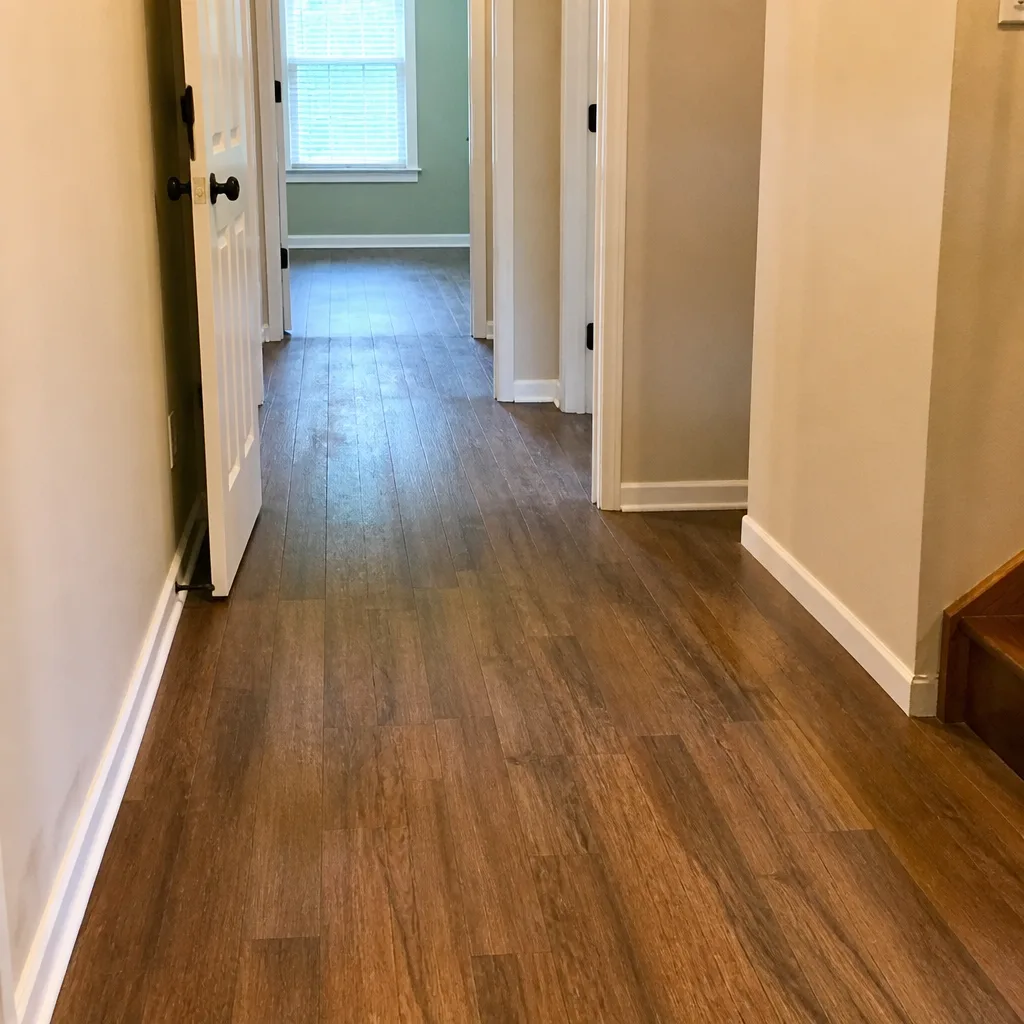

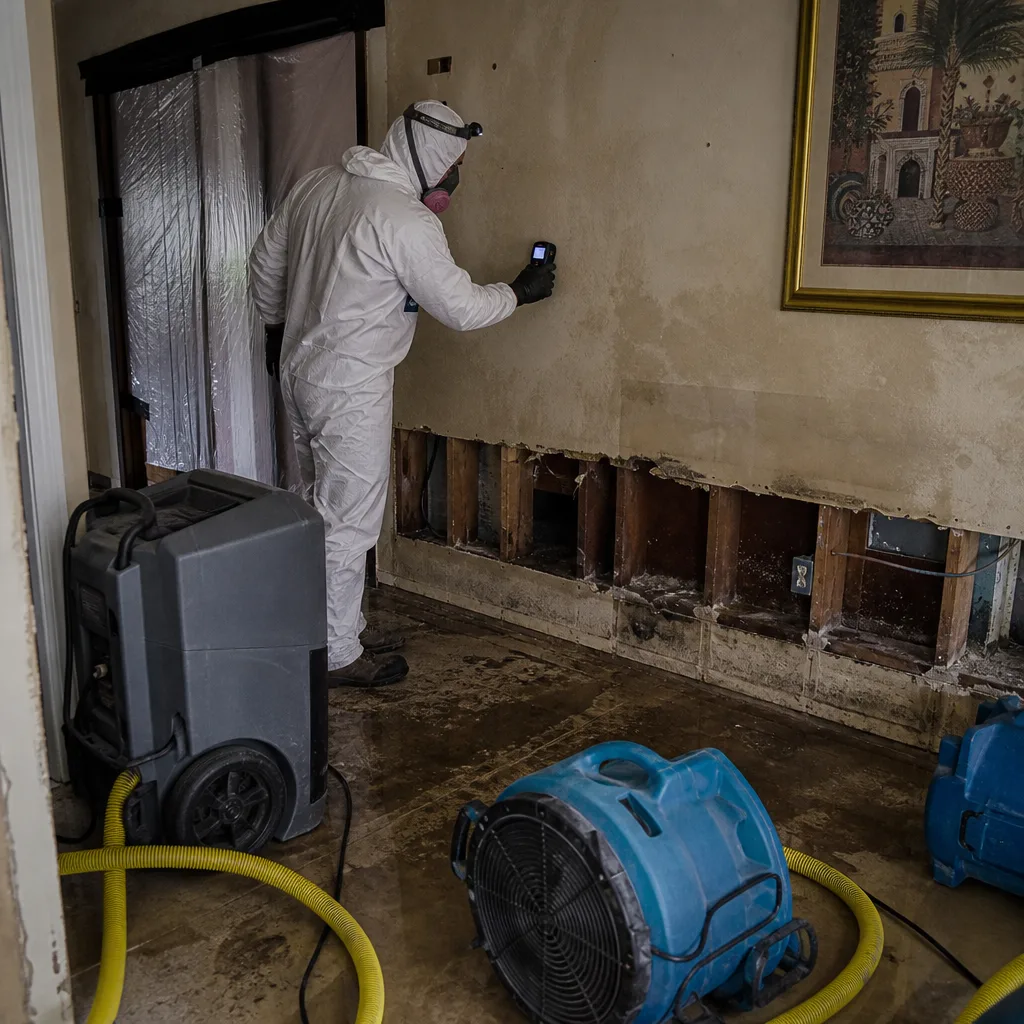 Before
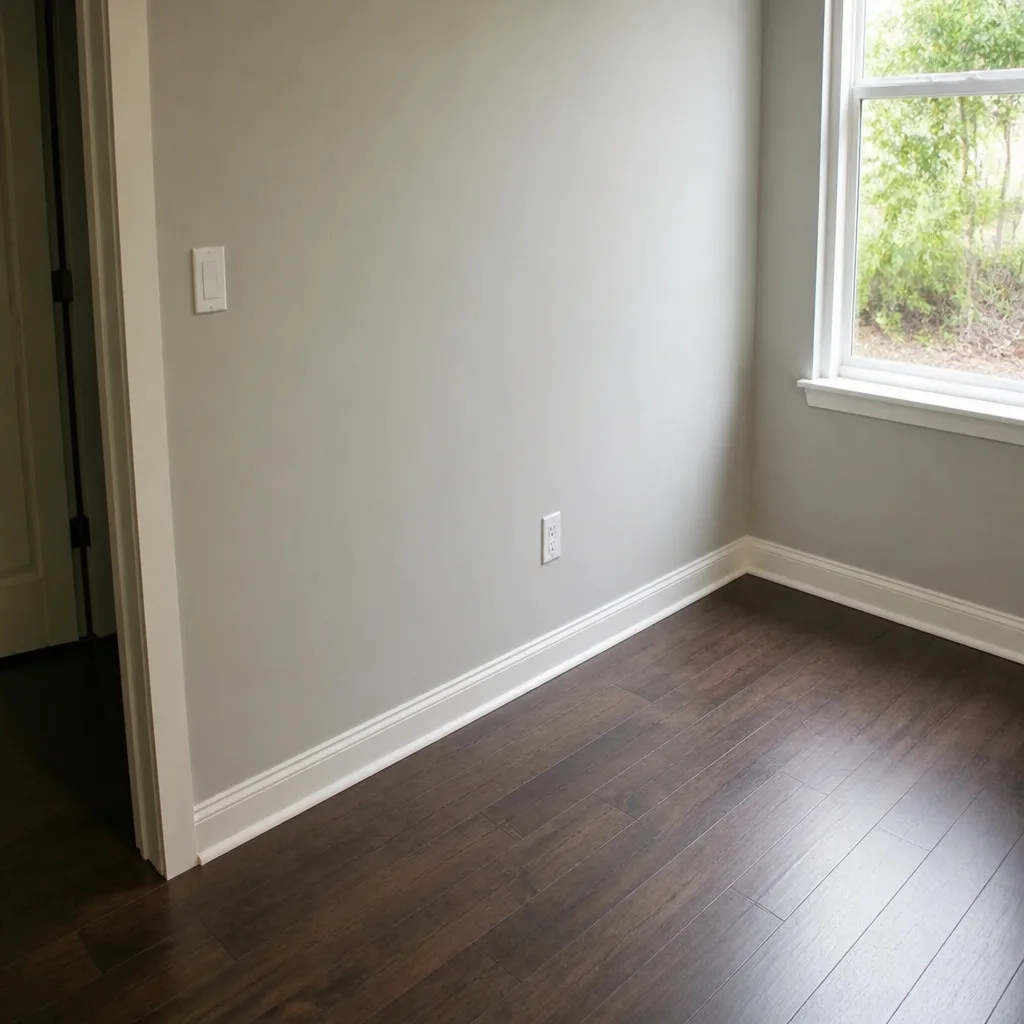 After
After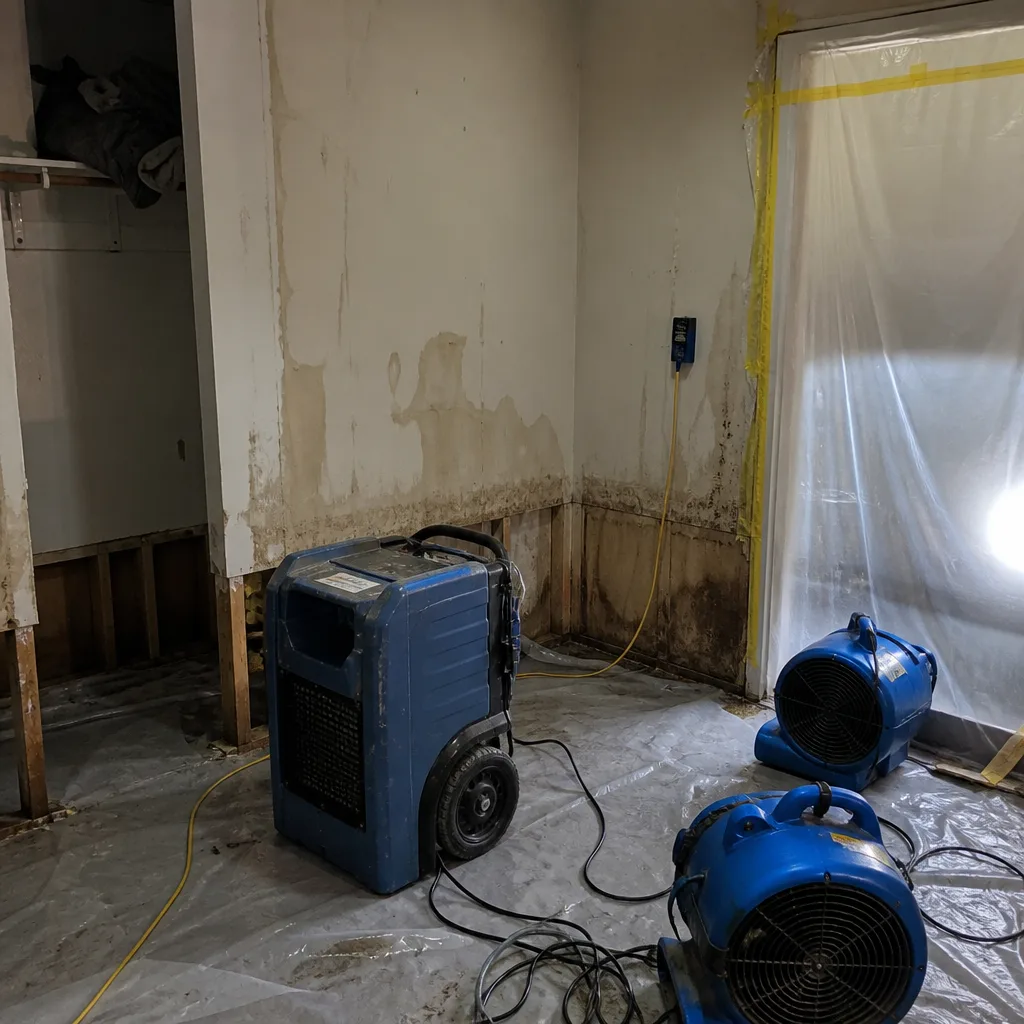 Before
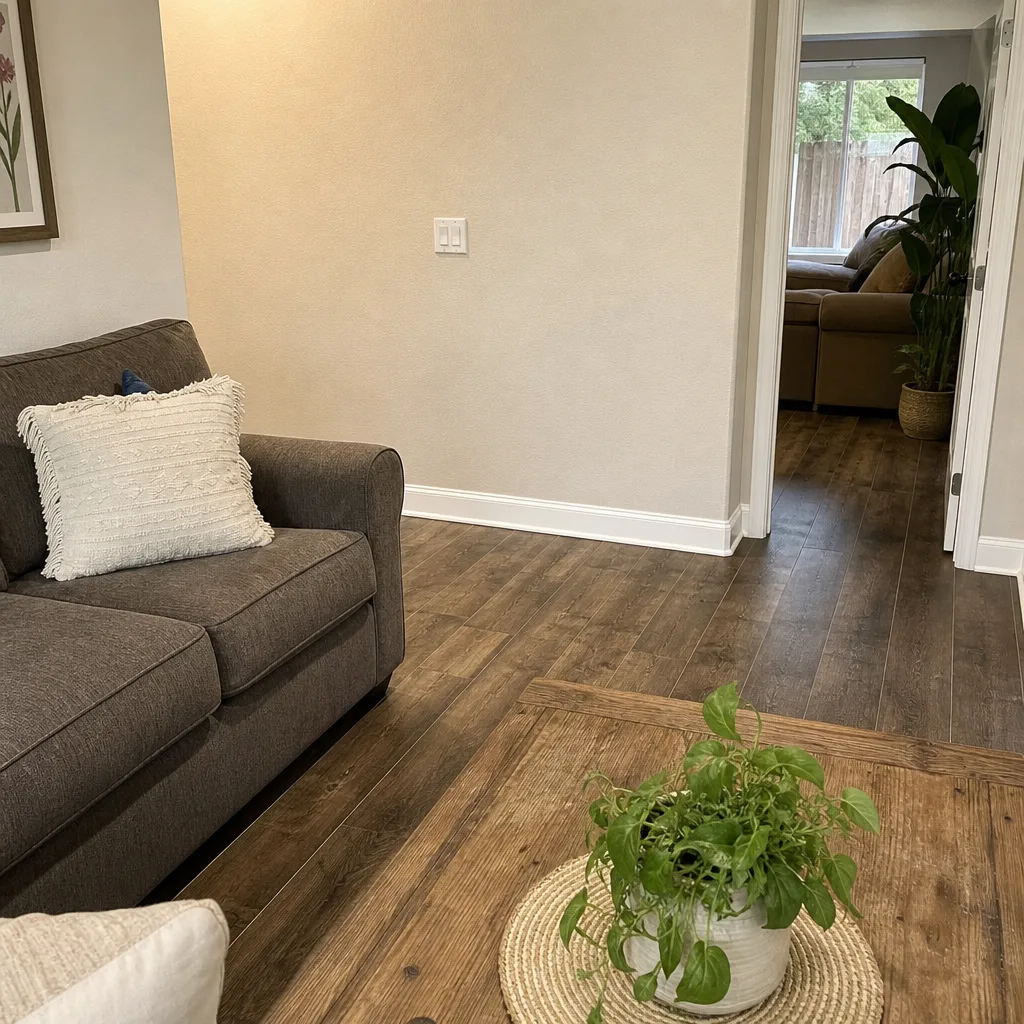 After
After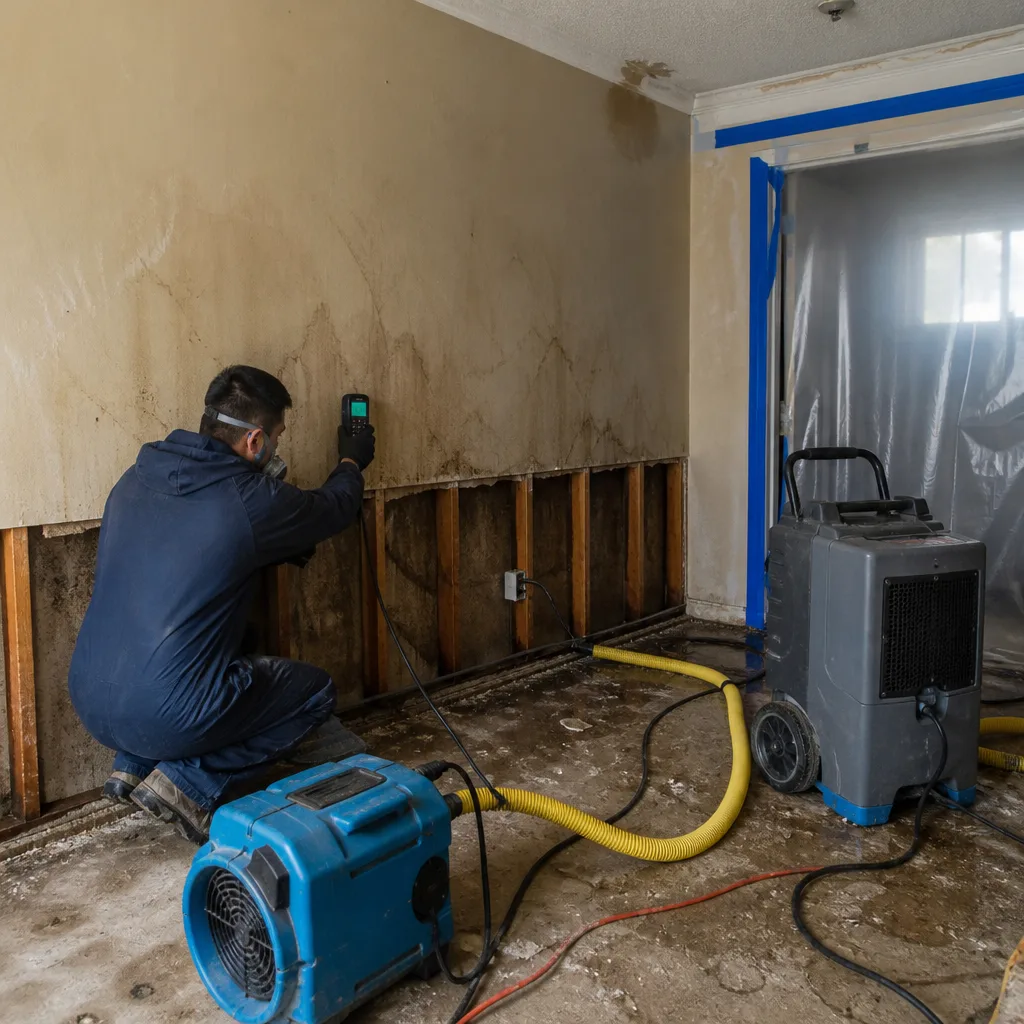 Before
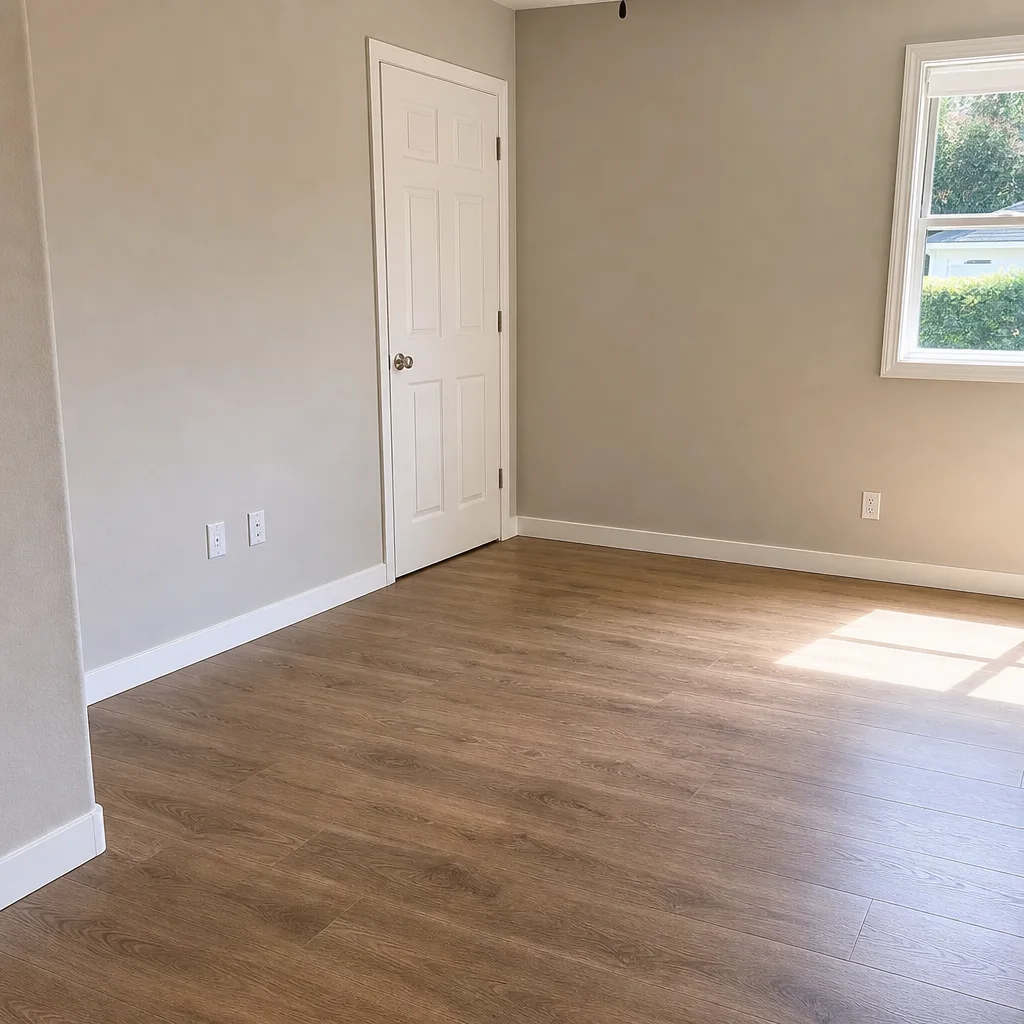 After
After24/7 Emergency Mold Remediation in Camp Pendleton South
Mold remediation in Camp Pendleton South typically costs $1,800-$4,500 for contained residential work and $5,500-$12,000 for whole-unit remediation with structural drying, with most Lincoln Military Housing work orders completed in 3-7 business days depending on clearance testing requirements. Our crews carry DoD-compliant credentials for base access and answer live at (760) 421-5658 24 hours a day, 7 days a week - no voicemail trees, no next-business-day callbacks while moisture keeps moving through your walls.
Speed matters because mold colonizes drywall and framing within 24-48 hours of moisture intrusion. In Camp Pendleton South’s older housing stock, that window closes fast: original 1960s galvanized supply lines in the San Onofre and Las Pulgas clusters corrode under the base’s moderately hard water, producing pinhole leaks that seep unseen through one or two PCS rotations. By the time a musty odor triggers a Lincoln Military Housing work order, the cavity is often fully colonized. We offer free visual inspection and moisture mapping, then deliver a written scope and price before any work begins - Haven Standard, Clause 1.
Understanding Mold Remediation Severity in Camp Pendleton South Properties
We classify mold contamination by affected square footage, material porosity, and whether the source moisture is still active. Limited contamination under 10 square feet on non-porous surfaces - tile, sealed concrete, metal ducting - typically responds to HEPA vacuuming, antimicrobial application, and localized drying. Moderate contamination, 10-100 square feet, requires containment barriers, negative air pressure with HEPA scrubbers, and removal of porous materials like drywall, insulation, and carpet pad. Extensive contamination exceeding 100 square feet or involving HVAC systems demands full containment, air filtration at 4-6 air changes per hour, and third-party clearance testing before reconstruction.
Camp Pendleton South’s housing stock skews the severity profile. The 1950s-1970s concrete-block and wood-frame duplexes in San Onofre and Las Pulgas lack vapor barriers and modern air sealing, so once a galvanized line pinholes, moisture wicks through block cavities and stud bays with minimal resistance. The coastal marine layer keeps baseline interior relative humidity at 60-70% in these older units, well above the 60% threshold where aspergillus and penicillium species accelerate. Newer Lincoln Military Housing developments with modern framing and mechanical ventilation present more straightforward containment scenarios, but even there, high tenant turnover means deferred reporting remains chronic. We document every moisture reading, every affected material classification, and every psychrometric target - the vapor pressure differential between wet and dry materials that drives drying - so your file holds up to Lincoln Military Housing inspection and insurance review.
Why Camp Pendleton South Property Owners Choose DryMark Restoration Fallbrook
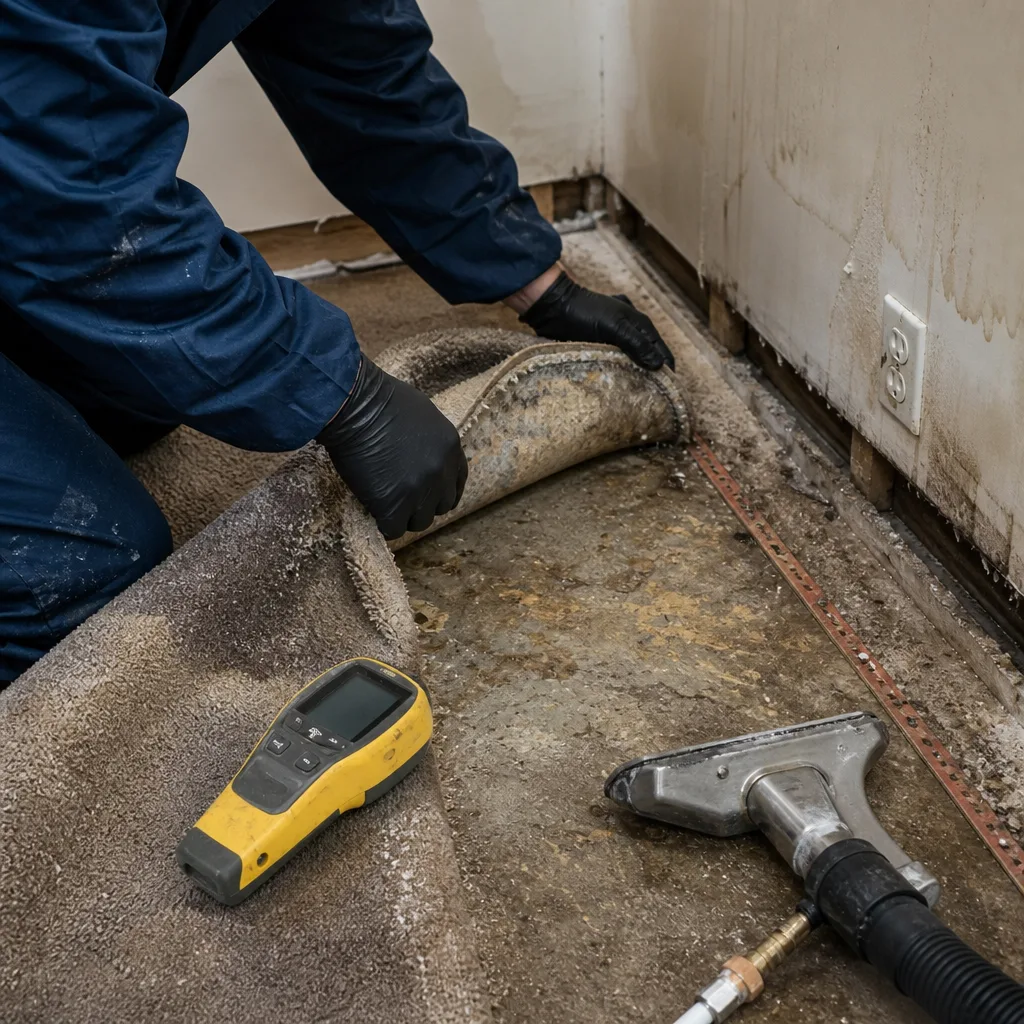
- 45-minute response commitment to Camp Pendleton South once base access is cleared - we maintain active DoD credentials and coordinate gate entry through Lincoln Military Housing so crews aren’t stalled at the main gate.
- 24/7 live answer by a real person, never an automated system; our dispatchers understand Lincoln Military Housing work order protocols and can initiate documentation while the call is still live.
- IICRC-certified crews holding WRT (Water Damage Restoration Technician), AMRT (Applied Microbial Remediation Technician), and FSRT (Fire & Smoke Restoration Technician) certifications - the specific codes required for mold, water, and post-wildfire soot remediation on base.
- Free visual inspection and moisture mapping with thermal imaging; we deliver a written scope and price before any containment is built or any material is removed.
- Direct insurance billing with photo-documented drying logs, room-by-room moisture readings, and line-item estimates formatted for carrier submission - the documentation that turns restoration invoices into payable claims.
- One team from extraction to reconstruction - no handoffs between subcontractors that fragment accountability and delay clearance testing.
BeforeAfterOur Mold Remediation Process
1. Inspection & Assessment
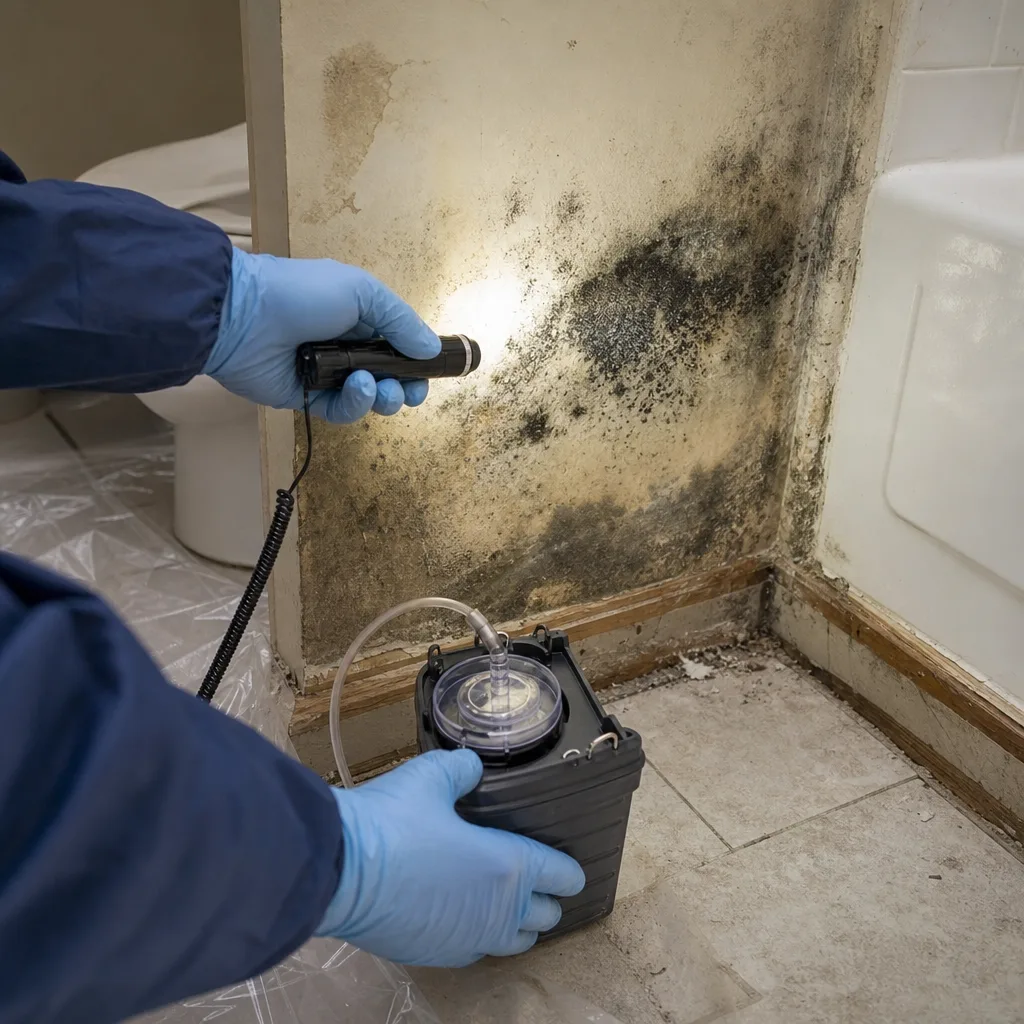
We arrive with thermal imaging cameras, penetrating and non-penetrating moisture meters, and hygrometers to map the full moisture perimeter - not just the visible stain. In Camp Pendleton South’s older units, we pay particular attention to block cavity wicking and the soft spots behind tub surrounds where galvanized lines typically fail. Every reading is logged, photographed, and written into the scope before work begins.
2. Containment & Air Filtration
We build polyethylene containment barriers sealed with zipper doors, then establish negative air pressure using HEPA air scrubbers (AFDs) rated at 500-2,000 CFM. This prevents cross-contamination to unaffected rooms - critical in Camp Pendleton South’s compact duplex layouts where HVAC systems often share air between units.
3. Moisture Source Elimination & Extraction
The leak gets stopped first. We coordinate with Lincoln Military Housing maintenance for line repair or replacement, then extract standing water with portable extraction units. For saturated concrete slab or block walls, we deploy Injectidry systems that push dry air through wall cavities via injection ports - the only way to dry the voids where Camp Pendleton South’s mold colonies typically establish.
4. Drying & Dehumidification
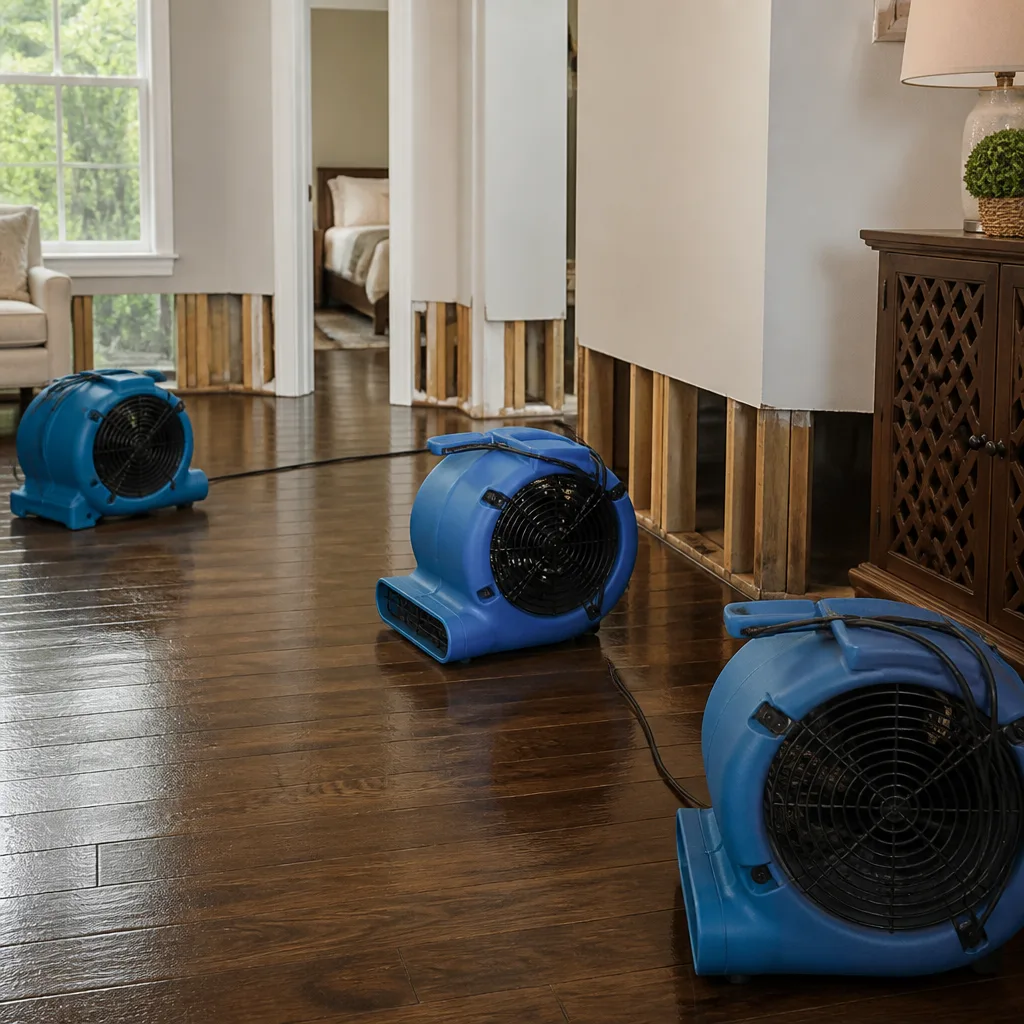
We size dehumidification by the cubic footage and Class of water loss: LGR (low-grain refrigerant) dehumidifiers from Dri-Eaz and Phoenix for standard residential drying, desiccant units for deep drying of dense materials. Air movers from XPOWER and B-Air create laminar airflow across wet surfaces. Daily psychrometric readings track specific humidity, temperature, and vapor pressure until materials reach their dry standard - documented in drying logs that accompany every invoice.
5. Antimicrobial Treatment & Air Quality Restoration
After drying, we apply EPA-registered antimicrobial agents to remaining structural materials, then run HEPA scrubbers for 24-48 hours of air filtration to capture airborne spores. In Camp Pendleton South units with chronic humidity issues, we install supplemental dehumidification and recommend crawl space encapsulation to break the moisture cycle that drives repeat contamination.
6. Clearance Testing & Restoration
We do not consider a job complete until third-party clearance testing confirms airborne spore counts at or below outdoor baseline levels - or we return at no additional labor charge under our 365-Day Done Right Promise. Reconstruction includes replacement drywall, insulation, flooring, and paint matched to Lincoln Military Housing specifications.
Need Emergency Mold Remediation in Camp Pendleton South Now?
Crews minutes away, answering live 24 hours a day. The sooner we start, the less it costs.
Working With Your Insurance Company
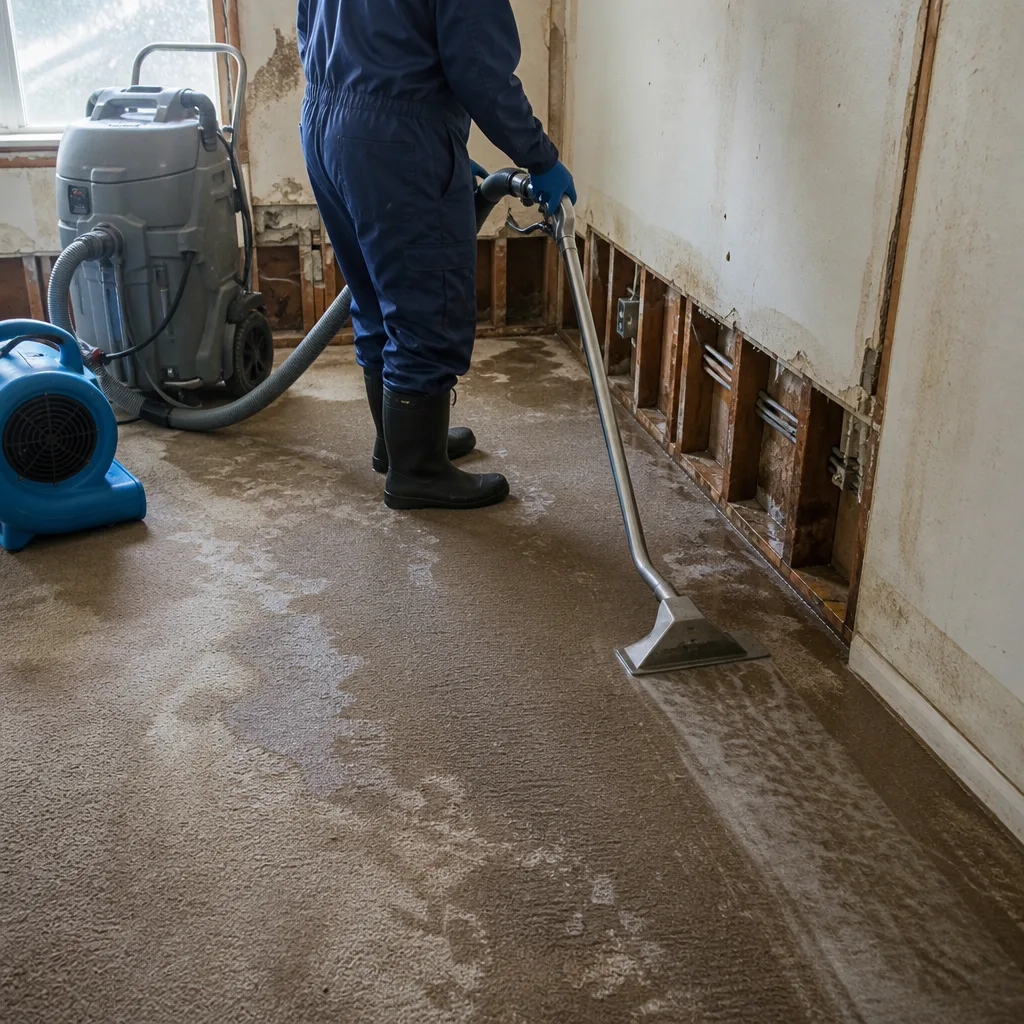
Every Camp Pendleton South mold job begins with documentation designed for claims review. We photograph the loss scene before any material is disturbed, record moisture readings with make, model, and calibration date of each meter, and produce a line-item scope in Xactimate format - the industry standard that adjusters recognize and carriers accept. Our Mold Remediation team coordinates directly with Lincoln Military Housing and your adjuster, not around them, because base housing claims often involve tri-party review: the tenant’s personal property coverage, Lincoln Military Housing’s structural policy, and occasionally TriCare or military relief funds for displacement.
We have handled claims with every major carrier serving military housing. The single most common reason a claim gets delayed is incomplete moisture documentation - an adjuster cannot approve replacement of “wet” drywall without proof it was wet, proof it was dried according to IICRC S520 standards, and proof it failed clearance. Our photo record, drying logs, and written scope provide that proof as standard deliverables, never upsells.
What We Provide Your Insurer
- Thorough documentation of the loss
- Photos of all damage, room by room
- Moisture readings and drying logs
- A detailed, line-item scope of work
- Direct coordination with your carrier
Built for Camp Pendleton South’s Loss Calendar
January through March brings the heaviest Southern California rain, and the Santa Margarita River corridor that bisects the base creates genuine flash-flood risk when watershed saturation meets storm runoff. Water intrusion from riverine flooding is Category 3 - grossly contaminated - which means porous materials must be removed, not dried in place, and antimicrobial treatment is mandatory per IICRC S500. April and May see the marine layer at its most persistent, with coastal fog penetrating inland far enough to keep interior humidity elevated in older units with single-pane windows and minimal mechanical ventilation. This is when we see the most hidden mold calls: surface condensation on cool block walls in San Onofre duplexes, slow colony growth behind baseboards where warm interior air meets the thermal break.
June through September is peak PCS season, and deferred reporting peaks with it. Families packing out for new duty stations ignore the musty closet or the soft spot in the hall bath subfloor; the incoming family discovers it two weeks after keys are issued. October and November bring Santa Ana wind events that drive wildfire ember cast across the base - post-fire smoke and soot remediation overlaps with mold season when suppression water soaks the same older units. December rain is lighter but persistent, and with shorter daylight hours, exterior walls stay damp longer. We maintain capacity for elevated call volume through every phase of this calendar.
Mold Remediation Across Camp Pendleton South’s Neighborhoods
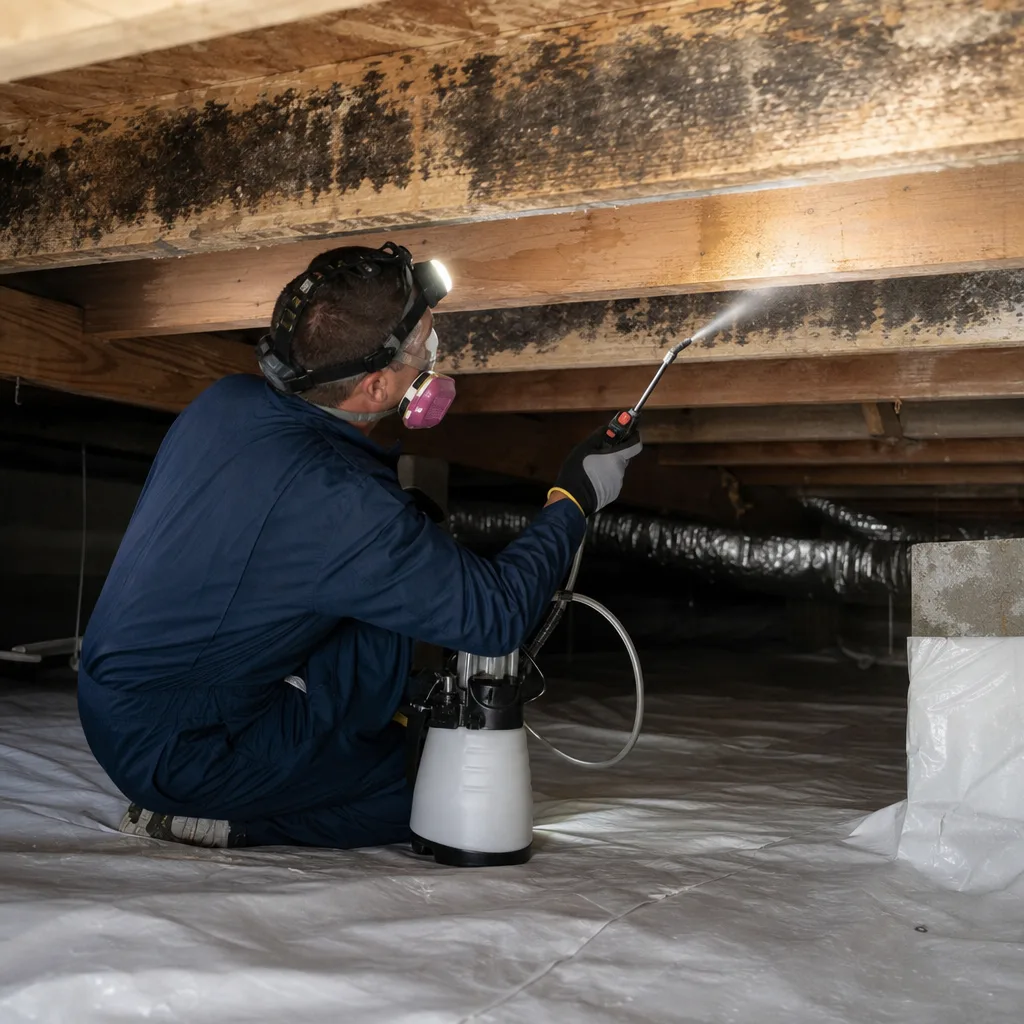
The San Onofre housing cluster, north of the 5 Freeway corridor, contains some of the oldest stock on base - 1950s and 1960s concrete-block duplexes with original galvanized supply lines, no vapor barriers, and minimal attic insulation. Our crews know these units by their floor plans: the pinhole leak behind the hall bath vanity is so common we’ve developed a standard scope for it. Moisture mapping typically reveals vertical wicking in block cavities up to 24 inches above the leak point, with lateral spread into adjacent closets where shoes and stored items hold humidity against the wall.
Las Pulgas, south of the river corridor, mixes 1970s wood-frame four-plexes with 1990s townhome-style units. The older wood framing is more forgiving for drying than block, but the raised crawl spaces underneath - rarely visited between tenant rotations - harbor chronic humidity and subfloor mold that vents upward through gaps in the aging HVAC ductwork. We treat Las Pulgas crawl spaces as standard procedure, not optional add-ons.
The newer Lincoln Military Housing developments near the main gate - Del Mar, Wire Mountain, and Pacific Views - present cleaner containment scenarios with modern framing, mechanical ventilation, and accessible utility chases. Even here, though, high turnover means deferred maintenance accumulates: a dishwasher supply line drips for six months, a shower pan weeps slowly into the subfloor, and the next tenant inherits a fully established colony. We coordinate all work through Lincoln Military Housing’s work order system, never direct with outgoing tenants who lack authority to approve scope changes.
Wire Mountain’s hillside siting creates unique drainage patterns. Gutters overflow during Santa Margarita River corridor storms, saturating exterior walls from the top down. We see more exterior-wall cavity mold here than anywhere else on base, often requiring removal of siding and sheathing to access the full moisture envelope.
Specialized Mold Remediation Services We Offer in Camp Pendleton South
Mold Inspection & Testing
Our inspections combine visual assessment, thermal imaging, and moisture mapping to locate hidden colonies without unnecessary demolition. In Camp Pendleton South, we focus on the legacy failure points: hall bath vanities, kitchen sink cabinets, and water heater closets in pre-1980 units where galvanized lines have reached end of service life. Air sampling and surface swab testing are available through third-party laboratories when clearance documentation is required for Lincoln Military Housing or insurance submission.
Mold Removal
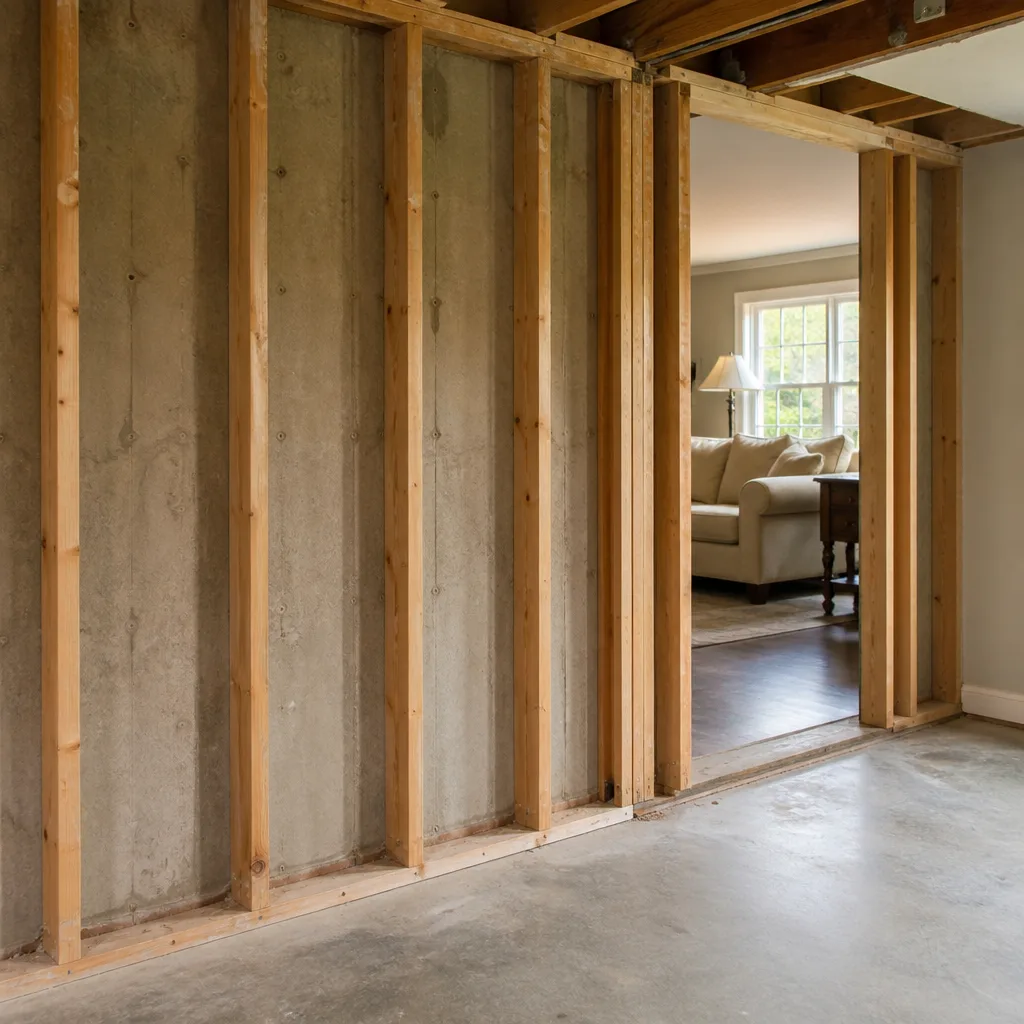
Removal follows IICRC S520 protocols: containment, negative air, HEPA filtration, then controlled demolition of non-salvageable materials. We classify every removed material by type - drywall, fiberglass insulation, carpet pad, particleboard subfloor - and document square footage and disposal path. In Camp Pendleton South’s older units, we also test for asbestos-containing materials and lead-based paint before disturbing pre-1978 surfaces, coordinating abatement when required.
Black Mold Remediation
Stachybotrys chartarum and other toxigenic species require the same containment rigor as any extensive mold job, with additional emphasis on spore suppression during disturbance. We do not use the term “black mold” as a scare tactic - we identify the species through laboratory analysis when health concerns are documented, then scope remediation to the actual contamination extent, not an inflated perimeter.
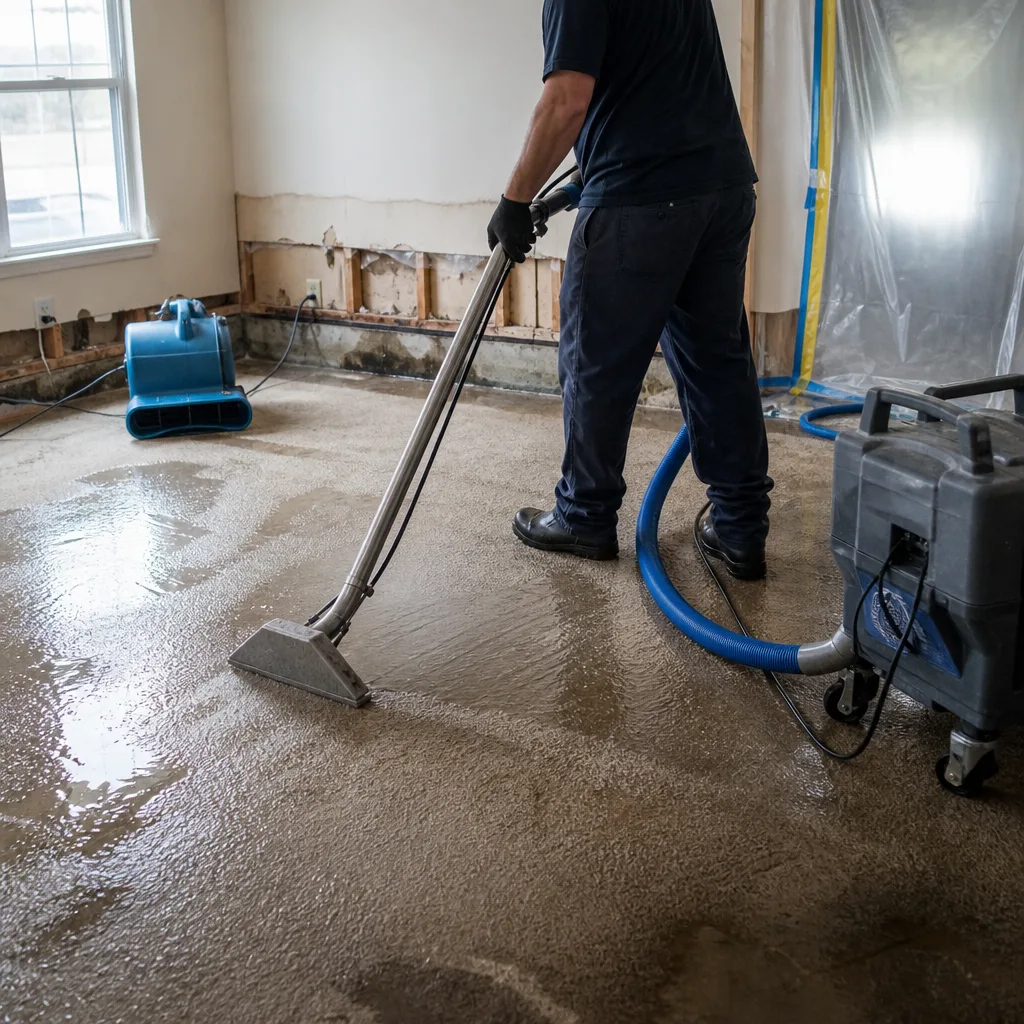
Air Quality Restoration
Post-remediation air scrubbing runs 24-48 hours minimum with HEPA filtration at 4 air changes per hour, followed by third-party clearance testing. In Camp Pendleton South’s compact duplex units with shared HVAC, we also inspect and clean supply and return ductwork to prevent recontamination from spores that migrated before containment was established.
Crawl Space Treatment
Las Pulgas and San Onofre crawl spaces are chronic moisture reservoirs: dirt floors, minimal ventilation, and the marine layer’s persistent humidity create conditions where mold colonizes joists and subfloor from below. We offer full crawl space encapsulation with vapor barrier installation, dehumidification, and conditioned ventilation - the only permanent solution for units where floor-cavity mold recurs after surface remediation.
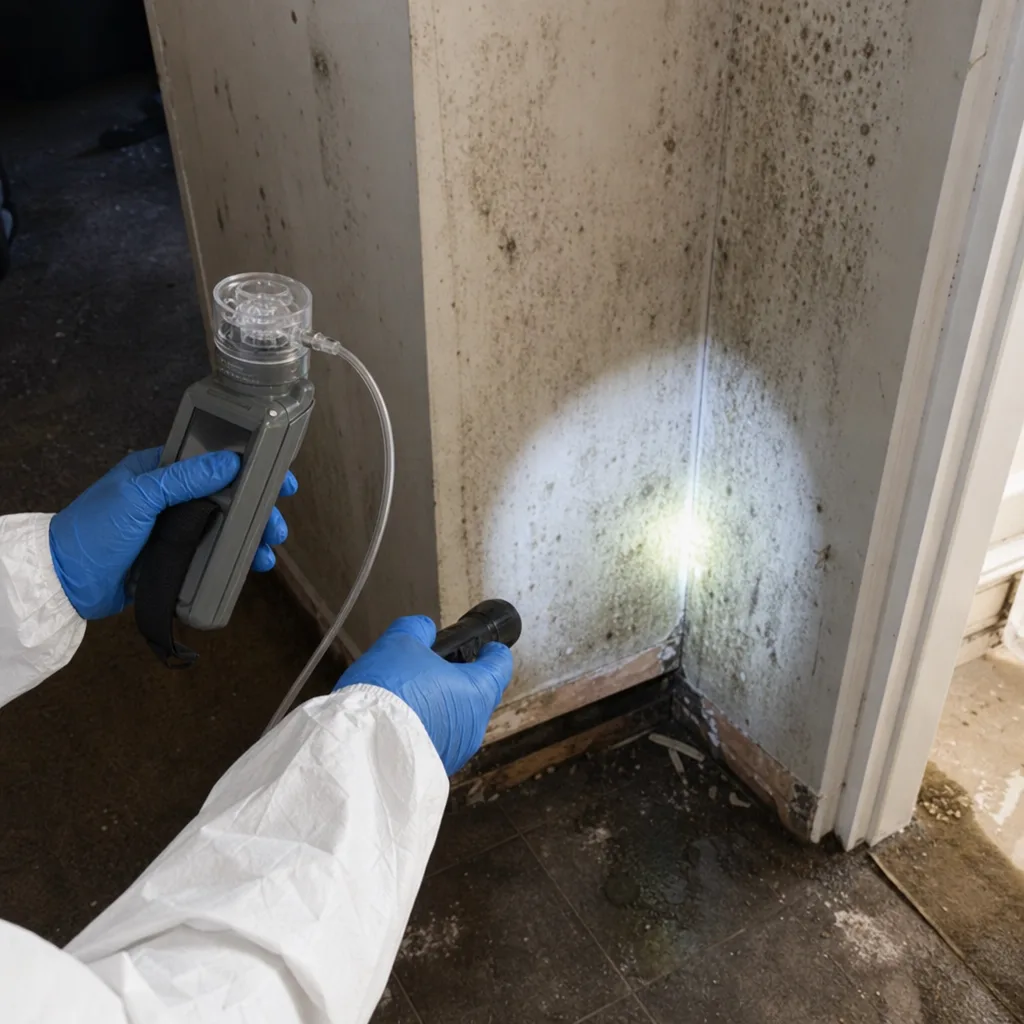
Moisture & Humidity Control
Structural drying is only half the solution in Camp Pendleton South. We install supplemental dehumidification, improve exhaust ventilation, and seal air leaks that drive condensation. Our drying targets are specific: 30-50% relative humidity at 68-72°F, with wood moisture content below 16%. We don’t guess - we measure, log, and warranty the result.
What happens when you call
- 1
A real person answersNo phone trees - you reach a local pro.
- 2
You get an upfront price rangeHonest numbers before anyone is dispatched.
- 3
A background-checked tech heads outLicensed & insured, dispatched right away.
- 4
You approve before work beginsNothing starts until you say go.
Mold Remediation Costs in Camp Pendleton South, CA
Typical mold remediation in Camp Pendleton South runs $1,800-$4,500 for contained, limited-contamination jobs in single rooms or small apartments; $5,500-$12,000 for whole-unit remediation with structural drying, HVAC cleaning, and clearance testing; and $15,000-$28,000 for extensive contamination in older multi-story units with asbestos abatement and full reconstruction. These ranges reflect our actual 2024-2025 Camp Pendleton South invoices, not national averages.
What moves the price: affected square footage, material type (drywall removal vs. hardwood salvage), whether the moisture source is still active, asbestos/lead testing requirements in pre-1978 units, and whether third-party clearance testing is specified by Lincoln Military Housing or the insurance carrier. Category 3 water losses from riverine flooding cost 40-60% more than Category 1 supply-line leaks because of mandatory removal and antimicrobial protocols.
Insurance coverage depends on your policy’s mold sublimit and the cause of loss. Sudden and accidental water damage - the burst pipe, the failed water heater - is typically covered; long-term leakage from deferred maintenance often is not. We provide the documentation that helps your adjuster classify the loss correctly. Our inspection and written scope are free; you pay nothing until you approve the price in writing - Haven Standard, Clause 1. Call (760) 421-5658 for your exact quote.
We Also Serve Cities Near Camp Pendleton South
Our Camp Pendleton South crews are dispatched from our San Diego coordination office and also respond to mold emergencies in Fallbrook, Camp Pendleton North, Oceanside, and Vista. Each carries the same DoD credentials, IICRC certifications, and documentation protocols.
Serving Camp Pendleton South, CA - Our Local Coverage Area
We’re based in the Camp Pendleton South area and know this community well. Use the map below to see our service coverage - if you’re nearby, we can almost certainly help.
Camp Pendleton South Mold Remediation Questions, Answered
Do you coordinate mold remediation directly with Camp Pendleton South residents?
No - all work on base is coordinated through Lincoln Military Housing, the privatized housing manager, not directly with individual residents.
Camp Pendleton South is an active Marine Corps installation with gate-controlled access. Our crews carry DoD-compliant credentials and background checks, but work orders must originate from Lincoln Military Housing. Residents should file a maintenance request first; Lincoln Military Housing then contacts us for assessment and scope. We document every step for the housing office’s review and the resident’s file. Call (760) 421-5658 if Lincoln Military Housing has directed you to contact us directly.
Why does mold show up so often in the older San Onofre and Las Pulgas housing units?
Original 1960s galvanized steel supply lines corrode from the inside under Camp Pendleton South’s moderately hard water, producing pinhole leaks that seep into walls for months before detection.
High tenant turnover from PCS rotations means families often notice a musty smell or soft drywall but defer reporting because they know they’re leaving soon. By the time Lincoln Military Housing issues a work order, the framing is saturated and active mold colonies are established. The coastal marine layer keeps baseline humidity high enough that even small leaks sustain growth. In the San Onofre housing cluster, our crew responded to a Lincoln Military Housing work order for a musty odor in a 1960s concrete-block duplex - moisture mapping with thermal imaging traced it to a pinhole leak in the original galvanized supply line behind the hall bath. We performed Category 2 water extraction, set containment and antimicrobial treatment, ran Dri-Eaz dehumidification and air movers for structural drying with daily drying logs, and completed a pack-out so the saturated framing and active colonies could be remediated to pre-loss condition. Because the family had already PCS’d, we coordinated the entire scope of work directly through Lincoln Military Housing rather than the tenant.
How fast does mold actually start after a leak in a Camp Pendleton South unit?
Mold colonization begins 24-48 hours after moisture intrusion on organic materials like drywall paper facing, wood framing, and carpet pad.
In Camp Pendleton South’s older units, the timeline compresses further because the coastal marine layer maintains 60-70% relative humidity indoors - near the threshold where aspergillus and penicillium species accelerate. A pinhole leak in a San Onofre duplex with minimal ventilation can produce visible colony growth within 72 hours and full cavity saturation within two weeks. This is why deferred reporting through even one PCS rotation is so damaging. If you suspect a leak, call (760) 421-5658 for same-day moisture mapping - estimates are free.
What does the water category mean for what has to be removed?
Category 1 (clean water from supply lines) allows drying of structural materials if addressed within 24-48 hours; Category 2 (gray water with chemical or biological contamination) requires removal of porous materials; Category 3 (black water from flooding or sewage) mandates removal of all porous materials and antimicrobial treatment of remaining structure.
Camp Pendleton South sees Category 3 losses during Santa Margarita River corridor flash floods, when river water carrying agricultural runoff and soil contaminants enters ground-floor units. This water is grossly contaminated by definition - no porous material can be salvaged, and drying logs must document antimicrobial application to all remaining structural members. Insurance adjusters scrutinize Category 3 documentation closely; our photo records and line-item scopes are formatted for their review.
Does the Santa Margarita River corridor or Santa Ana winds affect mold work here?
Yes - the river corridor creates flash-flood risk that drives Category 3 water losses, and Santa Ana wind events deposit wildfire smoke and soot that complicate air quality restoration.
Post-wildfire suppression water soaks the same older units where mold is already a chronic risk, creating combined contamination that requires both smoke residue removal and mold remediation. The marine layer’s persistent humidity, independent of seasonal weather, means dehumidification and humidity control are year-round necessities in Camp Pendleton South, not seasonal afterthoughts. Our crews size drying equipment for these actual conditions, not textbook baselines. Call (760) 421-5658 to discuss your specific situation.
Will my insurance cover mold remediation in Camp Pendleton South?
Coverage depends on the cause of loss and your policy’s mold sublimit - sudden and accidental water damage is typically covered, while long-term leakage from deferred maintenance is not.
Camp Pendleton South’s military housing policies often carry specific mold sublimits and require Lincoln Military Housing coordination. We document the loss as sudden and accidental when the evidence supports it, providing the photo record, moisture readings, and drying logs that help adjusters classify the claim correctly. Our written scope is formatted for direct carrier submission. We also offer a Free Second Opinion on any competitor’s written estimate - bring their quote and we’ll review it at no charge. Call (760) 421-5658 to start your documentation.
How long does mold remediation take in a typical Camp Pendleton South unit?
Limited contamination in a single room: 2-3 days of active work plus 24-48 hours of air scrubbing before clearance testing. Whole-unit remediation: 5-7 business days. Extensive reconstruction after major structural removal: 2-4 weeks.
Camp Pendleton South jobs often run longer than civilian equivalents because of Lincoln Military Housing’s inspection requirements and the need for third-party clearance testing before reoccupancy. Older units in San Onofre and Las Pulgas may also require asbestos abatement or lead-safe work practices that add containment and air-monitoring days. We build these timelines into our written scope so there are no surprises - Haven Standard, Clause 1.
Can my family stay in the home during mold remediation?
For limited contamination under 10 square feet in a single room with no HVAC involvement, containment may allow residents to remain in unaffected areas. For anything larger, we recommend temporary relocation.
Camp Pendleton South families should coordinate relocation through Lincoln Military Housing, which maintains temporary lodging options for displacement during major maintenance. Our containment and negative air systems are designed to protect adjacent units in duplex and four-plex configurations, but the noise, equipment, and crew presence make remaining in place impractical for most whole-unit jobs. We document the displacement recommendation in writing for insurance and housing office review.
Written by Alicia Brennan, Owner at DryMark Restoration Fallbrook, serving Camp Pendleton South since 2011 under The Haven Standard.